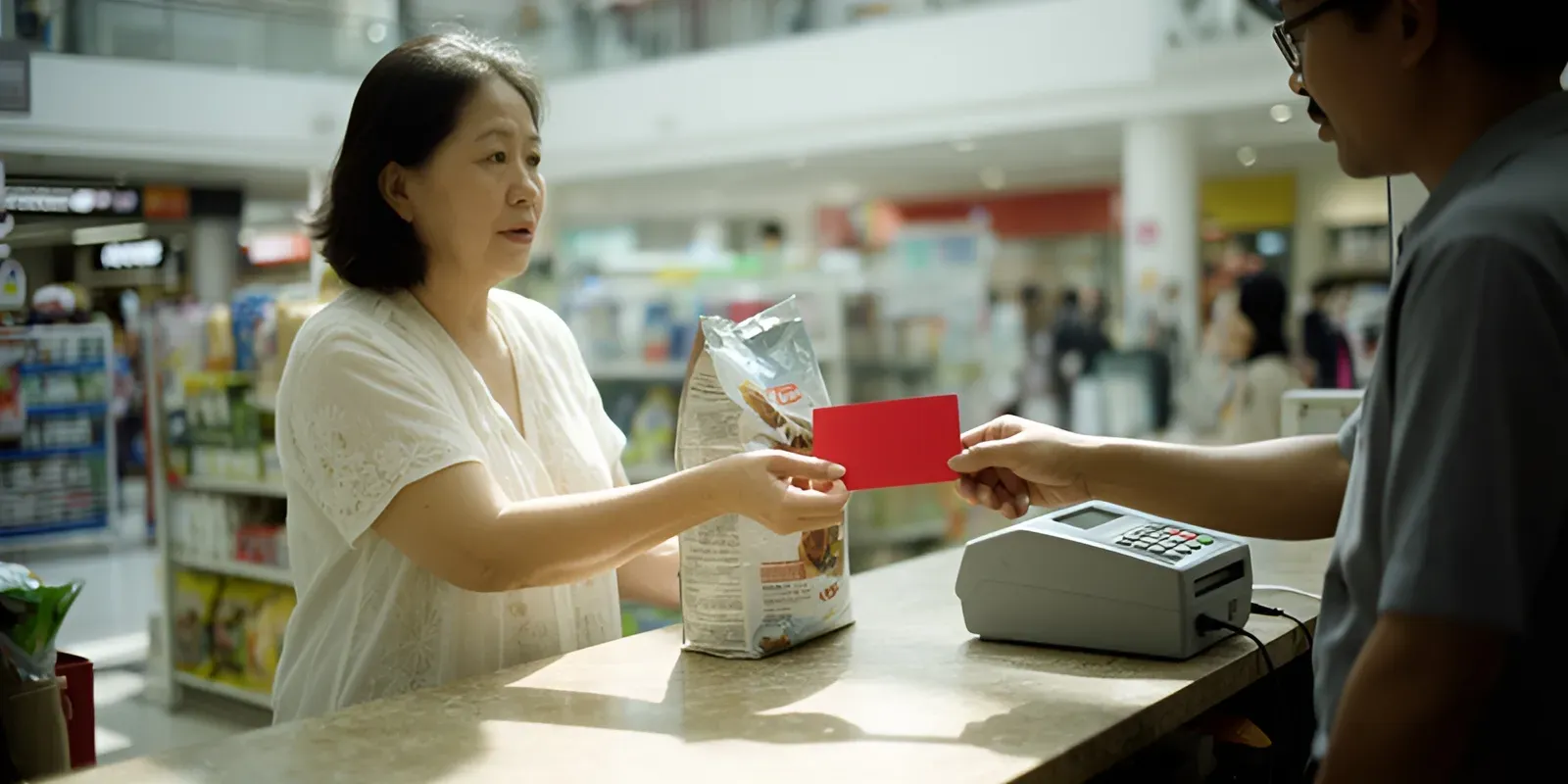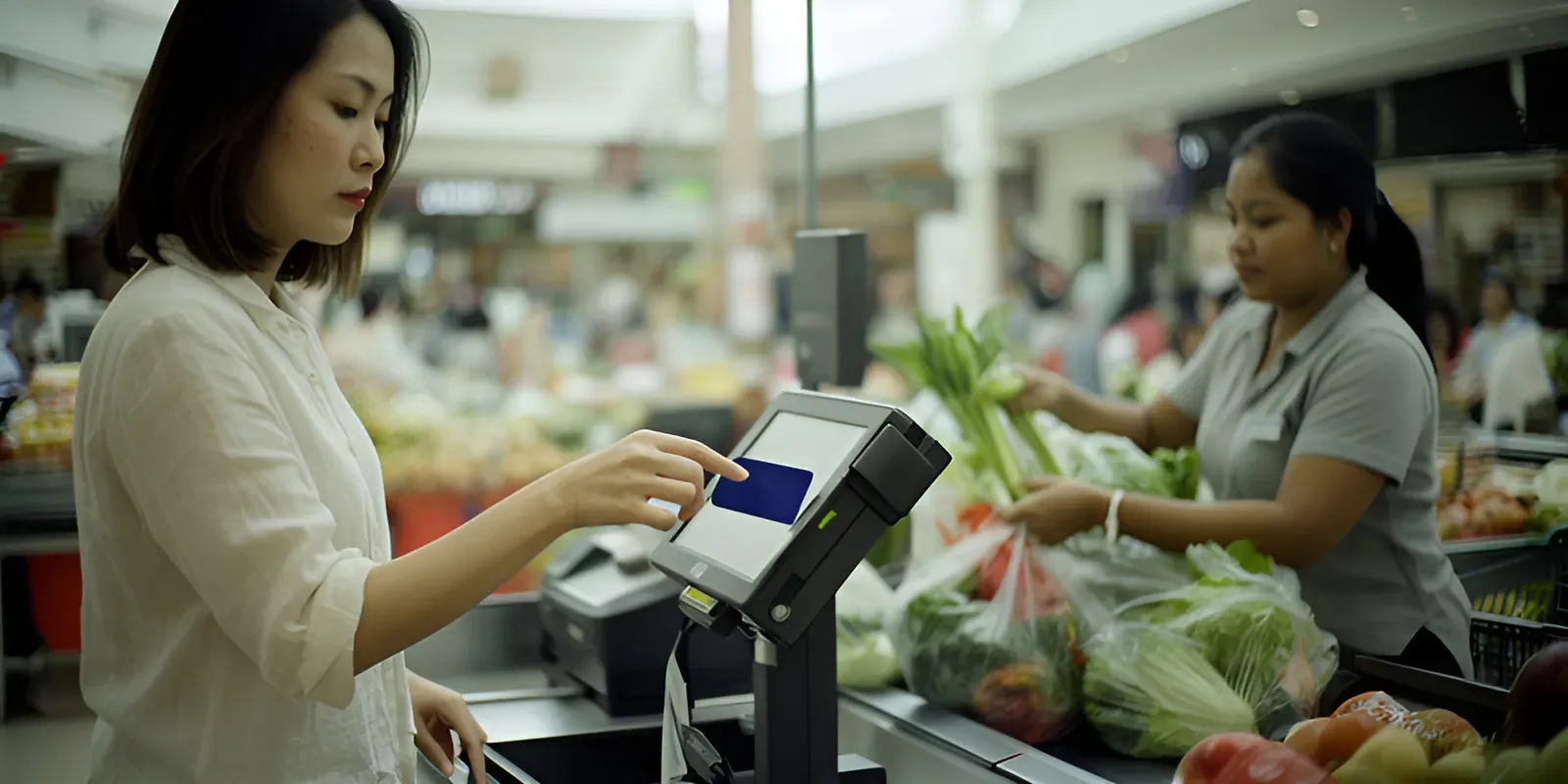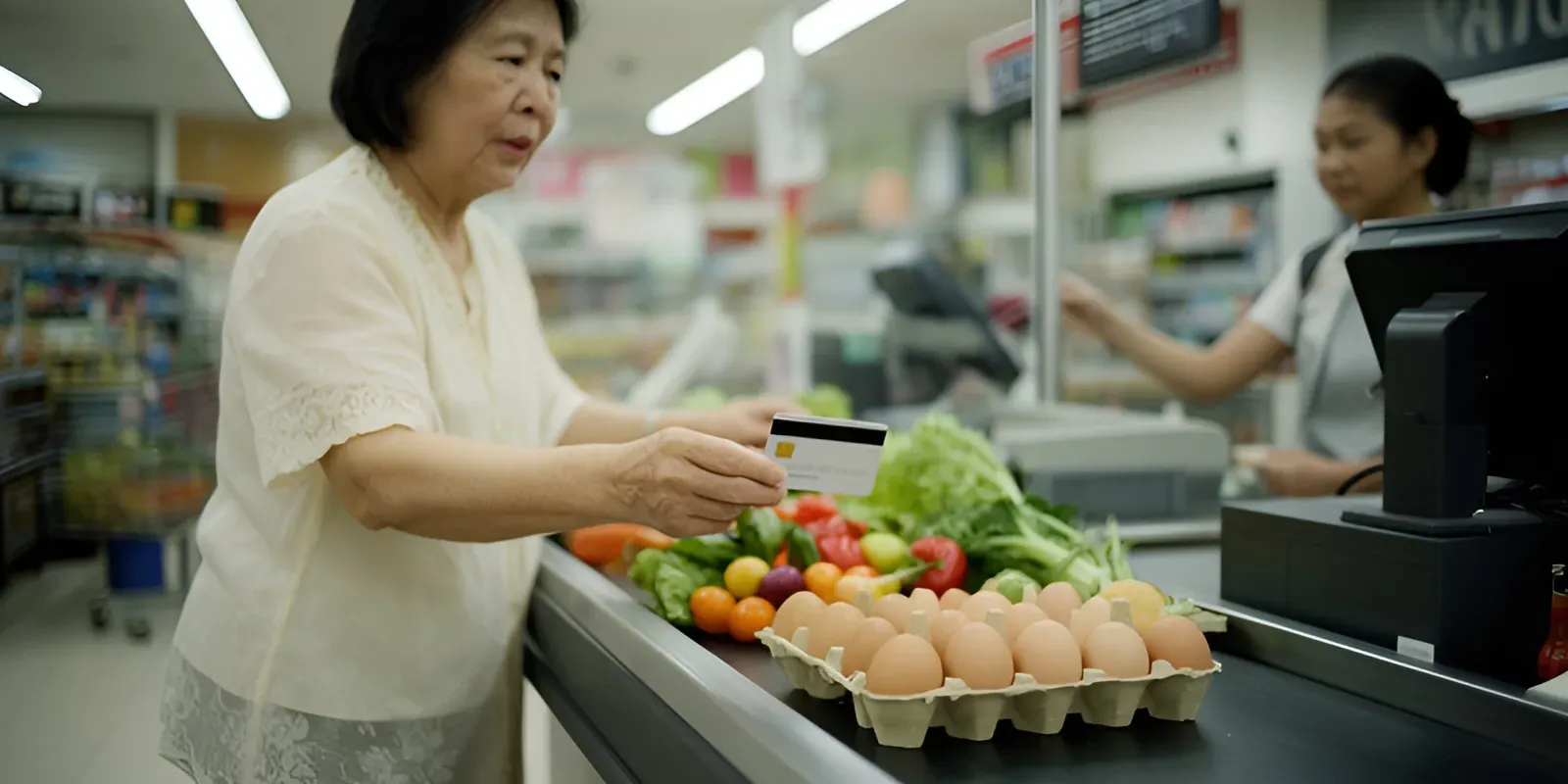
For a household that puts at least S$800 a month on one card, the best credit card for groceries in Singapore on headline rate is one of two that pay 6% at any supermarket: the OCBC 365 Credit Card and the Citi Cash Back Card. If you shop mostly at one chain, a chain-linked card can pay more on paper, with tighter conditions.
That is the short answer as at November 2026. The longer answer depends on how much you spend in total, because every card here either has a minimum spend, a cap or a store restriction.
How We Compared Grocery Cards
We looked at cards from the main Singapore issuers that pay a stated higher rate on supermarket spending, and kept those whose terms we could read on the bank’s own page. We ranked nothing. We compared each card on five measures:
- the rate on grocery spending, and what counts as groceries;
- the monthly spend needed to get that rate;
- the cap on rewards;
- the annual fee and whether the bank states a waiver;
- the minimum income.
Sign-up gifts and limited-time offers are left out because they change often. Banks do run them, so check the bank’s page before applying.
One rule sits behind every number below. Banks identify “groceries” by the merchant category code (MCC) on the transaction, usually MCC 5411 for grocery stores and supermarkets. The merchant’s bank sets the code. OCBC’s terms say plainly that a merchant’s code “may not always correspond with its nature of business”.
The Maths at $1,200 a Month
Take an illustrative household that charges $1,200 a month to one card: $500 at supermarkets, $300 at restaurants and $400 on everything else.
OCBC 365. Groceries and dining both earn 6% once the $800 minimum is met. That is 6% of $800, or $48. The other $400 earns 0.25%, or $1. Total: $49 a month, $588 a year, well under the $160 monthly cap.
Citi Cash Back. The same 6% on groceries and dining gives $48, plus 0.2% on the other $400, or $0.80. Total: $48.80 a month, about $586 a year. The cap here is $80 a month across all categories.
UOB One. Spending at least $1,000 in every month of a quarter, with at least 10 purchases a month, earns $100 a quarter, or $400 a year. From that tier, grocery spend earns an additional 2.67%: $13.35 a month, or about $160 a year. Total: about $560 a year.
Now subtract the annual fee. All three charge $196.20 a year. If the fee is not waived, the yearly value falls to roughly $392, $389 and $364. At this spend the three cards finish within $30 of each other, so the fee waiver and your non-grocery spending matter more than the headline rate.
The short version: At $500 of groceries a month, a 6% card earns about $30 a month on the groceries alone. You only get it if your total card spend reaches $800, and an unwaived $196.20 annual fee takes back more than six months of that.
The Best Credit Cards for Groceries, Compared
All figures are from each bank’s own page, as at November 2026.
| Card | Issuer | Grocery rate | Minimum monthly spend | Cap | Annual fee | Minimum income |
|---|---|---|---|---|---|---|
| OCBC 365 | OCBC | 6% on MCC 5411 | $800 | $160 a month across 6% categories | $196.20; first two years waived | $30,000 |
| Citi Cash Back | Citibank | 6% on MCC 5411 | $800 | $80 a month in total | $196.20; first year waived | $30,000 |
| UOB One | UOB | Up to 3.33% quarterly cashback, plus 2.67% or 4.67% on groceries | $1,000 or $2,000 for the grocery extra | Additional cashback capped at $120 a statement month | $196.20; first year waived | $30,000 |
| DBS yuu | DBS | 5% at yuu merchants; 18% if conditions met | None for 5%; $800 for 18% | DBS states a $144 cap on the 5% rate; no cap stated for 18% | $196.20; first year waived | $30,000 |
| POSB Everyday | POSB | 5% at Sheng Siong | None | $20 a month | $196.20; first year waived | $30,000 |
| UOB Lady’s (Family category) | UOB | 4 miles per $1 | None | $1,000 of spend a month | $196.20; first year waived | $30,000 |
What Each Card Pays, and the Catch
OCBC 365 Credit Card
From 1 November 2026, OCBC’s terms give 6% on groceries, dining, land transport and petrol, with a single $160 monthly cap and an $800 minimum spend in the calendar month. Everything else earns 0.25%. The card page says the fee is waived for the first two years.
The catch: miss $800 and the whole month earns 0.25%. It does not suit a household whose total card spend is usually below $800.
Citi Cash Back Card
Citi pays 6% on groceries and dining and 8% on petrol and private commute, above $800 of spend in the statement month. Other spending earns 0.2%.
The catch: the $80 cap covers every category together, and Citi credits cash back in multiples of $10 once $50 has built up. Citibank’s fees page waives the $196.20 fee for the first year only. It does not suit households that would also load dining, petrol and rides on the card, because the cap arrives quickly.
UOB One Card
The base is a fixed quarterly sum: $60, $100 or $200 for spending at least $600, $1,000 or $2,000 in each month of the quarter, with 10 or more purchases a month. Groceries then earn an additional 2.67% at the $1,000 tier and 4.67% at the $2,000 tier. UOB’s page says this covers all grocery spend, locally and overseas.
The catch: one short month drops the whole quarter to a lower tier. The $600 tier gets no grocery extra. It does not suit anyone whose spending swings from month to month.
DBS yuu Card
At yuu merchants, which include Cold Storage, CS Fresh, Giant and Guardian, the card earns a 5% rebate with no minimum spend. DBS adds 13% more in a calendar month when you spend at least $800 and transact at four different participating merchants. If you meet only one of those conditions, DBS says the 5% rate is capped at $144; its page does not state a separate cap for the full 18%.
The catch: rewards come as yuu Points, and the top rate needs four merchants every month. It does not suit FairPrice or Sheng Siong shoppers.
POSB Everyday Card
POSB lists 5% cash rebates at Sheng Siong with no minimum spend, paid as Daily$. Bonus rebates are capped at Daily$20 a calendar month, which is reached at $400 of spend.
The catch: other supermarkets earn 0.3%. It does not suit households that split their shopping across chains.
UOB Lady’s Card, Family Category
Choosing the Family category earns 10X UNI$ per $5, which UOB equates to 4 miles per $1, at grocery stores. Bonus earning stops after $1,000 of spend in a calendar month. Other spending earns 0.4 miles per $1.
The catch: you may choose one category per quarter, points are awarded in $5 blocks, and UNI$ expire two years after the quarter they were earned. It does not suit anyone who would rather have cash. Our UOB Lady’s Card review has the detail.
When a Grocery Card Is Not Worth It
If your supermarket bill is under $250 a month, a 6% card earns $15 or less on it. Spending more to reach a minimum is not a saving. A card with a flat rate and no minimum may serve a small household better; see our guide to cashback cards.
Rewards also assume the statement is paid in full. UOB, for example, charges 27.8% a year on unpaid balances, and MoneySense notes the late fee is often a flat $100. One month of interest on a $1,200 balance is about $28, more than half the month’s cashback in the example above. If you are carrying a balance, the debt payoff calculator is a better starting point than a rewards card.
What To Do Next
- Add up three months of supermarket receipts and your total card spend. The second number decides which cards are open to you.
- Check the grocery definition, cap and fee waiver on the bank’s own page before applying. Terms change, and promotions come and go.
- If you are weighing a miles card against cashback, put your own numbers into the cashback vs miles calculator.
- See how these cards fit a wider wallet in our guide to credit cards in Singapore, or read the bank pages for OCBC, Citibank, UOB and DBS and POSB.