Overseas spending fees come from five places: your card’s foreign currency fee, the exchange rate, the “pay in SGD?” offer at the till, ATM charges, and the way booking sites bill your card. On a bank card the first alone is about 3.25%. Most of it is avoidable with a little planning, and the choice of card matters more than anything else.
This guide ties the pieces together and links to our detailed reviews. All provider figures are as at November 2026.
Where Overseas Spending Fees Come From
| Cost | Typical size | Who sets it | How to reduce it |
|---|---|---|---|
| Foreign currency fee on a bank card | 3.25% at DBS (1% network, 2.25% bank) | Card network and issuer | Use a card or wallet that states no fee |
| Exchange rate | Varies by the second | Network, bank or wallet | Compare with a reference rate before converting |
| Dynamic currency conversion (DCC) | Merchant’s markup, plus 1% to 2.8% from the bank at DBS | Merchant and its processor | Decline; pay in the local currency |
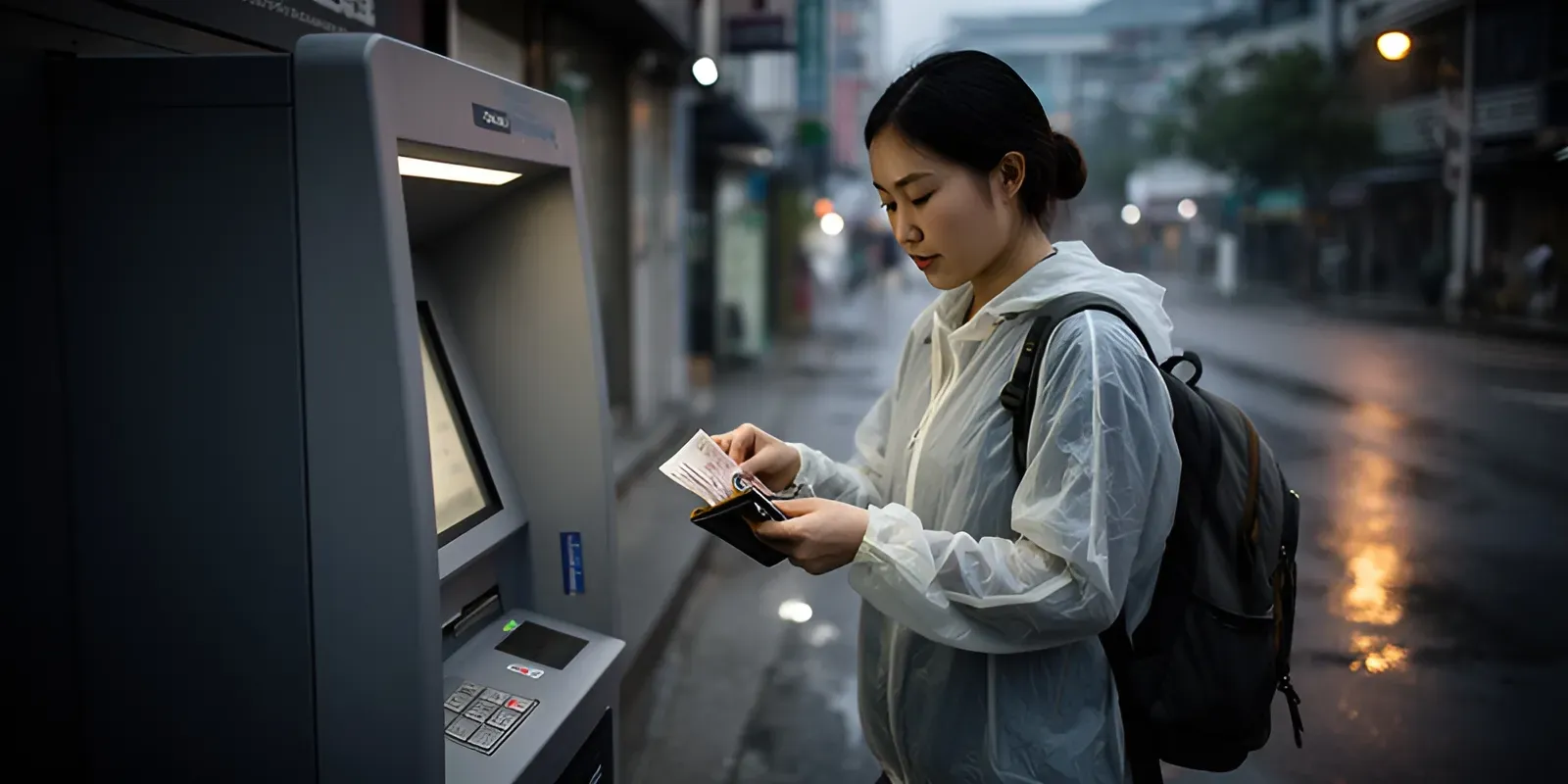
| ATM withdrawal | Bank fee, operator fee, or a cash advance fee on a credit card | Issuer and ATM operator | Use a wallet’s free allowance; withdraw less often |
| Booking sites | 0% to 3.25%, depending on currency and processing | Your card issuer | Check the currency charged; pick the card to match |
MoneySense explains that a foreign currency card transaction bundles an exchange rate and fees, and that the card network’s fee is typically passed on to you. Our companion article on foreign transaction fees and DCC explains the mechanics.
A Worked Example: S$2,000 in Japan by Card Type
Illustration only, using our own figures and each provider’s stated fees. It assumes the same underlying exchange rate for every row, which will not be exactly true.
| How you pay | Stated fee | Cost on $2,000 |
|---|---|---|
| Bank credit or debit card (DBS’s 3.25%) | 3.25% | $65 |
| Bank card, accepting “pay in SGD” at an assumed 5% merchant markup plus DBS’s 1% credit card fee | About 6% | About $121 |
| Trust Link credit card | No fee from Trust; Visa’s rate | $0 |
| YouTrip, topped up by PayNow | 0% stated | $0 |
| YouTrip, topped up by Visa credit card | 1.5% top-up fee | $30 |
| Revolut Standard, converted on a weekday | No fee within $5,000 a month | $0 |
| Revolut Standard, converted at a weekend | 1% | $20 |
| Wise | From 0.19%, varies by currency | From $3.80 |
| DBS Visa Debit Card with yen held in My Account | No foreign exchange fee | $0 |
The DCC row works like this: a 5% markup turns $2,000 into $2,100, and a 1% fee on that is $21, for a total of $121.
The spread between the cheapest and the dearest row is more than $100 on one modest trip.
The short version: Pay in the local currency, use a card or wallet that states no foreign currency fee, convert on a weekday, and take cash from a wallet’s free ATM allowance. Those four habits remove most of the cost.
Step 1: Choose the Right Card for the Job
There are three broad choices.
A travel wallet. Wise, Revolut and YouTrip are e-money wallets with cards. Each is cheapest on a different measure, and each has a catch. We compare them in Wise vs Revolut vs YouTrip, and against bank options in the best multi-currency cards in Singapore.
A credit card with no foreign currency fee. Trust’s key facts sheet says foreign amounts convert at Visa’s rate with no fee from Trust. There is nothing to top up, but it is credit, so pay it off in full.
A miles card. You pay about 3.25% and earn miles. Our guides to the best credit cards for overseas spending and the best travel credit cards work out the cost per mile.
Each has a group it does not suit. Wallets do not suit people who will not manage top-ups, or who want deposit insurance on the balance. No-fee credit cards do not suit anyone who might carry a balance. Miles cards do not suit people who never redeem miles.
Whichever you pick, carry a second card from a different network. Cards get declined.
Step 2: Say No to “Pay in SGD?”
Visa says merchants and ATMs must give you the choice and show the rate before you decide. Declining does not stop the payment.
DBS adds its own fee to such transactions: 1% on credit cards and 2.8% on debit cards. So accepting costs you the merchant’s markup and a bank fee.
Step 3: Plan Your Cash
Never withdraw cash on a credit card unless you have no alternative. It is a cash advance. Trust, for example, charges 8% from 1 February 2026.
The travel wallets state these free overseas ATM allowances:
| Wallet | Free a month | Fee after | Fee on $500 withdrawn |
|---|---|---|---|
| YouTrip | $400 | 2% | $2 |
| Revolut Standard | $350 or five withdrawals | 2%, minimum $1.49 | $3 |
| Wise | $100 | 1.75% | $7 |
The ATM operator may charge on top, and may offer its own “pay in SGD” conversion. Decline that too. None of the three cards works at ATMs in Singapore.
Step 4: Watch How Booking Sites Charge You
A hotel or ticket bought from Singapore can still be an overseas transaction. MAS has explained that a Singapore dollar payment processed overseas can attract an international transaction fee.
Before paying, check the currency on the payment page. Afterwards, check the statement. Each of our reviews covers the fees, currency and refund rules of one platform: Trip.com, Agoda and Klook.
Refund rules matter more than fees here. A non-refundable booking you cannot use costs 100%.
Step 5: Do Not Overpay for Data
Unplanned roaming is an overseas spending fee too. Singtel lists daily unlimited roaming from $19 a day, against ReadyRoam data packs from $5 (1GB for Malaysia, Indonesia and Thailand).
Compare a travel eSIM with your telco’s pack in our guide to the best eSIM for travel, or read the Airalo eSIM review.
The Limits of Travel Wallets
Wallet balances are e-money. MAS states that e-money is not a bank deposit and is not protected by deposit insurance, although major payment institutions must safeguard customer money. MoneySense says foreign currency bank deposits are not covered by deposit insurance either.
For a holiday balance this is a small risk. It is a reason not to keep savings in a wallet.
If you are sending money to family or paying overseas fees rather than spending on holiday, see the best way to send money overseas from Singapore.
What To Do Next
- Look up your current card’s foreign currency fee in its fee schedule.
- Pick one main way to pay and one backup before the trip, and set them up at home.
- Convert on a weekday, and compare the rate with a reference rate first.
- Decide now that your answer to “local currency or SGD?” is the local currency.
- Set the holiday amount in the budget planner, and buy travel insurance when you book.
- Check your statements after the trip and query anything you do not recognise.
- If you shop in Japan, note that tax-free shopping there became a refund system on 1 November 2026.