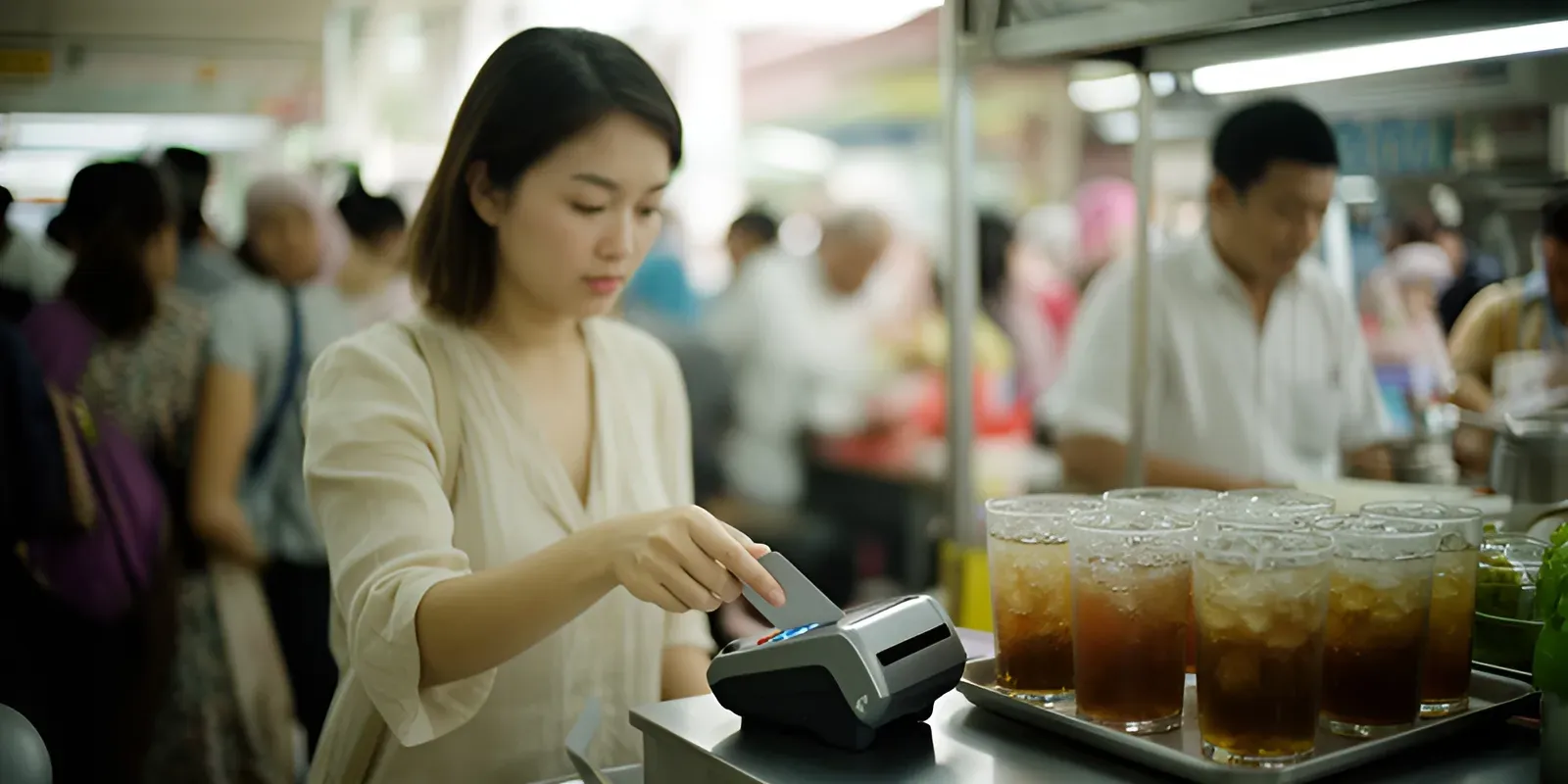
A prepaid card in Singapore is a card you load with money first, usually through an app, and then spend only what you put in. As at November 2026, the four main options each lead on a different measure: YouTrip’s terms list no exchange fee and the largest free overseas ATM allowance at S$400 a month, Wise converts at the mid-market rate with a fee from 0.19%, Revolut’s free plan charges 1% at weekends, and Instarem’s amaze charges no fee on wallet spending.
None of them is a bank account. That matters more than the fee table, so we cover it first.
How We Compared Prepaid Cards
We read each provider’s own fee page and terms in November 2026 and checked each company against the MAS Financial Institutions Directory. We compared:
- the fee for spending in a foreign currency;
- the free overseas ATM allowance and the charge after it;
- card and top-up costs;
- balance and spending limits;
- how customer money is held.
We included cards that work by loading money first and are open to the public in Singapore. We left out the GrabPay Card and BigPay because we could not confirm a current Singapore product and fee page for either. We do not cover sign-up offers: they exist, change often, and each provider’s page shows the current one. We are not paid by any of these companies.
Prepaid Card vs Bank Debit Card: Whose Money Is It?
A bank debit card, which we explain in what is a debit card, spends money in your savings account. Singapore dollar deposits are insured up to S$100,000 per depositor per bank.
A prepaid card spends e-money. MAS states plainly that e-money is not a bank deposit and is not protected by deposit insurance, and that major payment institutions must safeguard the e-money float. YouTrip, for example, says customer money sits in segregated accounts at DBS, Standard Chartered, UOB and Deutsche Bank, held on trust for users.
The MAS directory lists Wise, Revolut and YouTrip as major payment institutions as at November 2026. Instarem’s amaze terms say it is run by Nium Pte Ltd, authorised by MAS as a major payment institution (licence PS20200276).
The short version: Prepaid cards are cheaper than bank cards abroad, but they hold e-money, not insured deposits. Pick one on the measure you need most, and keep only trip-sized sums in it.
Prepaid Card Singapore Comparison Table
All figures are from each provider’s own pages, as at November 2026.
| Card | Foreign currency spending | Free overseas ATM cash | Card fee | Top-up costs | Limits worth knowing |
|---|---|---|---|---|---|
| YouTrip (prepaid Mastercard) | No fee in the terms; 12 wallet currencies | First S$400 a calendar month, then 2% | Free; replacement S$10 | Free, except 1.5% by Visa credit card | Balance up to S$20,000; S$10 refund fee on closing |
| Revolut Standard | Revolut’s rate plus any fee shown in-app; 1% outside market hours and above S$5,000 a month | S$350 or five withdrawals a rolling month, then 2% (min S$1.49) | First card free, delivery fee applies | Free from Singapore bank accounts; 0.30% to 2.08% from some debit cards | No ATM use in Singapore |
| Wise card | Mid-market rate, conversion fee from 0.19%, varies by currency | S$100 a month, then 1.75% of the excess | S$8.50; replacement S$4 | 2% on topping up other e-wallets with the card | No ATM use in Singapore; S$100,000 spent or sent in 12 months |
| amaze (wallet mode) | No fee on wallet spending; 11 currencies | Up to S$1,000 a day; 2% fee | Free; replacement S$9 | Free by PayNow; 1.5% (min S$0.50) by Apple Pay | Linked-card mode costs more (below) |
amaze can also link to up to five of your Mastercard cards instead of using its wallet. In that mode, Instarem’s fee page lists 1% (minimum S$0.50) on Singapore dollar transactions and an FX spread of up to 2.1% on foreign ones. Use the wallet if low fees are the point.
For comparison, DBS’s fee guide states that its debit and credit cards charge 3.25% on foreign currency transactions.
Worked Example: A S$1,500 Week in Tokyo
Illustration only. Take an illustrative traveller who spends S$1,200 on card in yen and withdraws S$300 of yen from an ATM. Each card’s stated fees apply; the exchange rates themselves differ by provider and by the minute, so this measures fees, not the final rate.
- Bank debit card at 3.25%: S$39 on the spending, plus the bank’s overseas ATM fee on the cash.
- YouTrip, topped up by PayNow: S$0 on the spending and S$0 on the cash (within S$400). Total S$0.
- Revolut Standard, all converted at a weekend: S$12 (1%) on the spending and S$3 (1% exchange; no ATM fee within S$350). Total S$15.
- Wise, at the 0.19% floor: from S$2.28 on the spending; S$3.50 ATM fee (1.75% of the S$200 above the free S$100) plus conversion from S$0.57. Total from S$6.35.
- amaze, wallet mode: S$0 on the spending and S$6 (2%) on the cash. Total S$6.
The ATM’s own operator may add a charge to every row. On Revolut, converting on a weekday avoids the 1% out-of-hours fee, but the app shows any exchange fee before you confirm.
The gap between a bank card and the cheapest prepaid card here is about S$39. Over three trips a year, that is real money, which is why these cards are popular. Our wider guide to the best multi-currency cards in Singapore adds bank and credit card options.
The Catch, and Who Each Card Does Not Suit
YouTrip does not suit people who fund it by Visa credit card (1.5% each time), or who need a currency outside its 12 wallets. Closing the account costs S$10 if you want the balance refunded. More in our YouTrip review.
Revolut Standard does not suit people who convert at weekends or exchange more than S$5,000 a month, both of which carry 1%. The page dated 28 October 2026 now describes the exchange fee as variable and shown in-app, so check before converting large sums. See our Revolut review.
Wise does not suit heavy cash users: only S$100 a month of ATM withdrawals is free. It also costs S$8.50 for the physical card. See our Wise review.
amaze does not suit anyone who mainly wants the linked-card mode for its convenience. The 1% local fee and up to 2.1% FX spread there can cost more than your own bank card’s rewards are worth.
Prepaid cards in general do not suit savings, emergency funds or anything you cannot afford to have frozen while a dispute is sorted out. They earn no interest; YouTrip’s terms say so directly. For idle money, a savings account is the better home: see our hub on the best savings accounts in Singapore.
They also carry no credit line, which helps with budgeting but leaves nothing to fall back on if a card is blocked abroad. If you are weighing that trade-off, read debit card vs credit card.
What To Do Next
- Decide what you need most: low-fee card spending, overseas cash, or holding a currency ahead of a trip. Choose on that one measure.
- Check the provider in the MAS Financial Institutions Directory before loading money.
- Top up by PayNow or bank transfer where the provider charges for card top-ups.
- Carry a second card from a different provider in case one is declined.
- Compare everyday bank debit cards, which do pay cashback, in our guide to the best debit cards.
- Set a trip budget first with the budget planner. Promotions exist and change often, so check each provider’s own page for the current one.