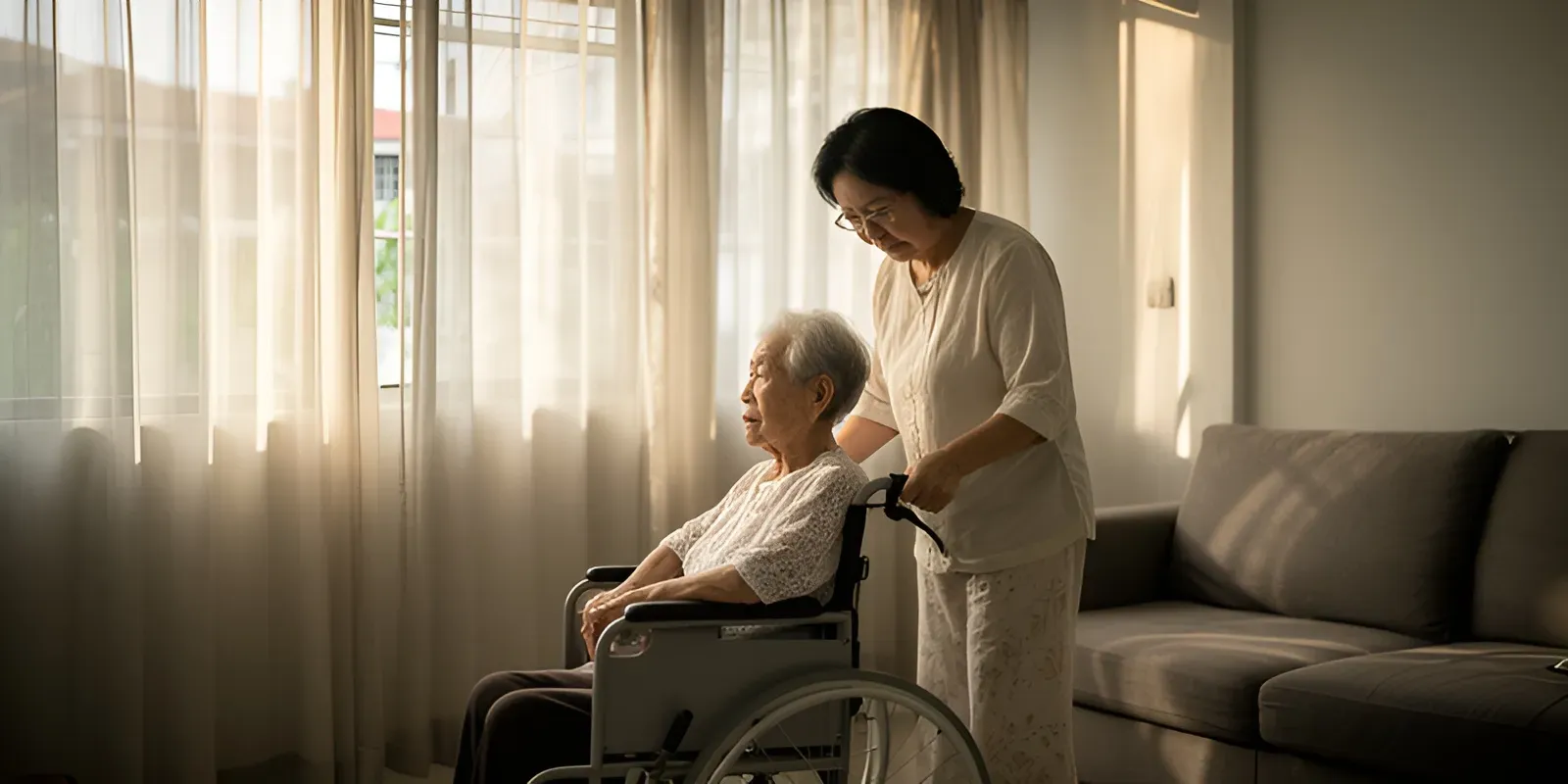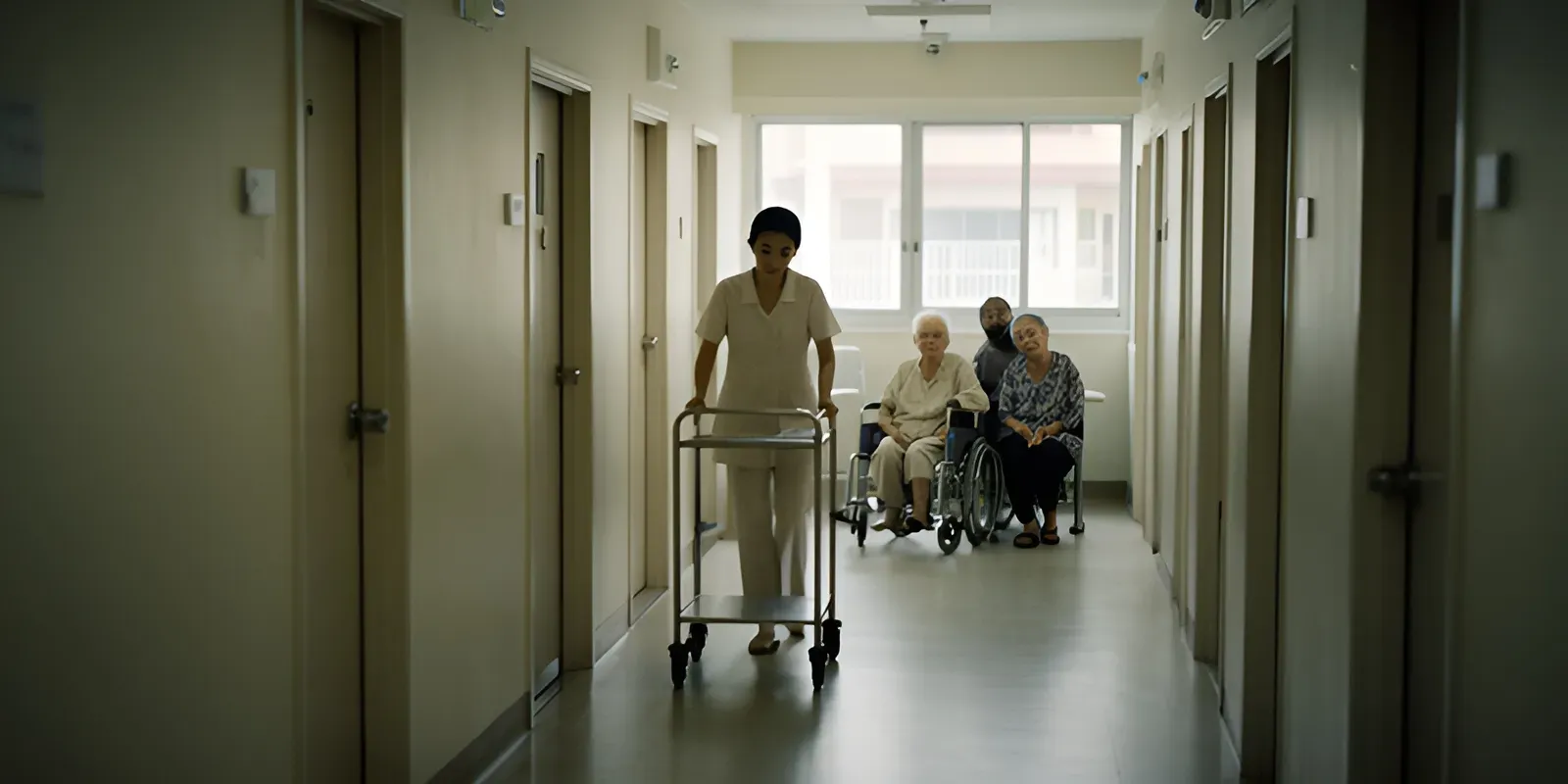
A nursing home in Singapore costs from about S$3,900 a month before subsidies, and $4,900 a month in the Ministry of Health’s 2026 illustration for severe disability. Means-tested subsidies, CareShield Life and MediSave Care can cut that sharply for lower-income households, while middle-income families pay much more of it themselves.
Ask people in their 60s what worries them most about later life and the cost of care comes up again and again. Not hospital bills, which most people know MediShield Life helps with, but the long, slow cost of needing help every day.
The good news is that the Government publishes real numbers. Here is what care costs, and how the different schemes share the bill.
Nursing Home Cost in Singapore Before Subsidies
The Agency for Integrated Care (AIC) says the basic cost of a nursing home starts from $3,900 a month before government subsidies, depending on the level of care needed. Some homes charge deposits and other fees on top.
The Ministry of Health’s own illustration for 2026, published in August 2025, uses higher figures for someone with severe disability:
- Nursing home: fees of $4,900 a month before subsidies.
- Care in the community (such as day care or home care): about $2,700 a month.
These are illustrations, not price lists. Actual fees vary by home, room type and care needs.
How the Bill Gets Shared
MOH’s illustration shows how much a lower-income household (PCHI of $1,500) might pay after support:
| Nursing home | Community care | |
|---|---|---|
| Monthly cost before support | $4,900 | $2,700 |
| Government subsidy and other financing | $3,700 (75% subsidy) | $1,900 |
| CareShield Life payout | from about $689 | from about $689 |
| Estimated out-of-pocket cost | about $510 | about $110 |
The 75% subsidy in MOH’s example sits at the top of the scale. Households with higher incomes receive less. Subsidies are means-tested on monthly per capita household income (PCHI): total household income divided by the number of people living together.
Since 1 July 2026, MOH’s subsidy table for nursing homes gives Singapore Citizens up to 75%, and up to 80% for those born in 1969 or earlier. Permanent Residents can receive up to 50%. The subsidy tapers as PCHI rises: at $2,601 to $3,600 a citizen born after 1969 gets 30%, at $3,601 to $4,800 it is 10% (15% if born in 1969 or earlier, 5% for Permanent Residents), and above $4,800 there is none. So a middle-income family can face much more of the $4,900. Our retirement timeline calculator maps your payouts and savings against rising expenses, year by year.
The short version: A nursing home can cost around $3,900 to $4,900 a month before subsidies. Means-tested subsidies, CareShield Life and MediSave Care can bring that down sharply for lower-income households. Middle and higher-income families pay much more of it themselves.
MediShield Life and CareShield Life Do Different Jobs
They are easy to confuse. CPF Board puts it simply: MediShield Life covers large hospital bills, while CareShield Life and ElderShield provide monthly cash payouts, which gives families flexibility in choosing care arrangements.
CareShield Life
- Pays monthly cash, for life, once an MOH-accredited assessor finds you unable to perform at least three of the six activities of daily living.
- A successful claim in 2026 pays $689 a month. A claim in 2027 pays $717 a month.
- Payouts for those not yet claiming rise each year until age 67.
- Citizens and Permanent Residents born in 1980 or later are covered automatically from age 30. For those born in 1979 or earlier, joining is optional.
- Premiums can be paid fully from MediSave.
ElderShield, for older cohorts
Many people born before 1970 have ElderShield instead. ElderShield 300 pays $300 a month for up to 60 months. ElderShield 400 pays $400 a month for up to 72 months. ElderShield holders can apply to switch to CareShield Life, which pays for life.
MediSave Care, ElderFund and Caregiver Support
MediSave Care. People aged 30 and above with severe disability can withdraw up to $200 a month in cash from their own or their spouse’s MediSave, according to CPF Board. The full $200 needs a MediSave balance of $20,000 or more; the amount steps down to $50 at $5,000, and nothing below that. See our guide to MediSave top-ups and the Basic Healthcare Sum.
ElderFund. For lower-income Singapore Citizens with severe disability who are not covered by CareShield Life or ElderShield, ElderFund pays up to $250 a month. AIC lists the criteria as: aged 30 and above, a MediSave balance below $10,000, and household income of $1,500 or less per person a month. Applications go through AIC.
Home Caregiving Grant. If your loved one is cared for at home rather than in a nursing home, MSF says the grant pays up to $600 a month from April 2026, with the income threshold raised to $4,800 PCHI. AIC’s tiers are $600 a month for PCHI up to $1,500, $400 for $1,501 to $3,600 and $200 for $3,601 to $4,800.
Questions Worth Asking Now
- If you needed daily help, where would you want to receive it: at home, in day care or in a nursing home?
- Who in the family would coordinate care, and do they have the legal authority to act if you cannot? That is where a Lasting Power of Attorney matters.
- Are you on CareShield Life, ElderShield or neither? Do you hold a supplement plan?
- Roughly what is your household’s PCHI, and which subsidy tier would that put you in?
What To Do Next
- Log in to the CPF website to check whether you are covered by CareShield Life or ElderShield, and the payout you would receive.
- Use AIC’s resources or call AIC on 1800-650-6060 to understand care options and subsidies.
- Look at MOH’s subsidy table to estimate your tier.
- If you are thinking about supplement plans, compare benefits, premiums and exclusions carefully rather than price alone.