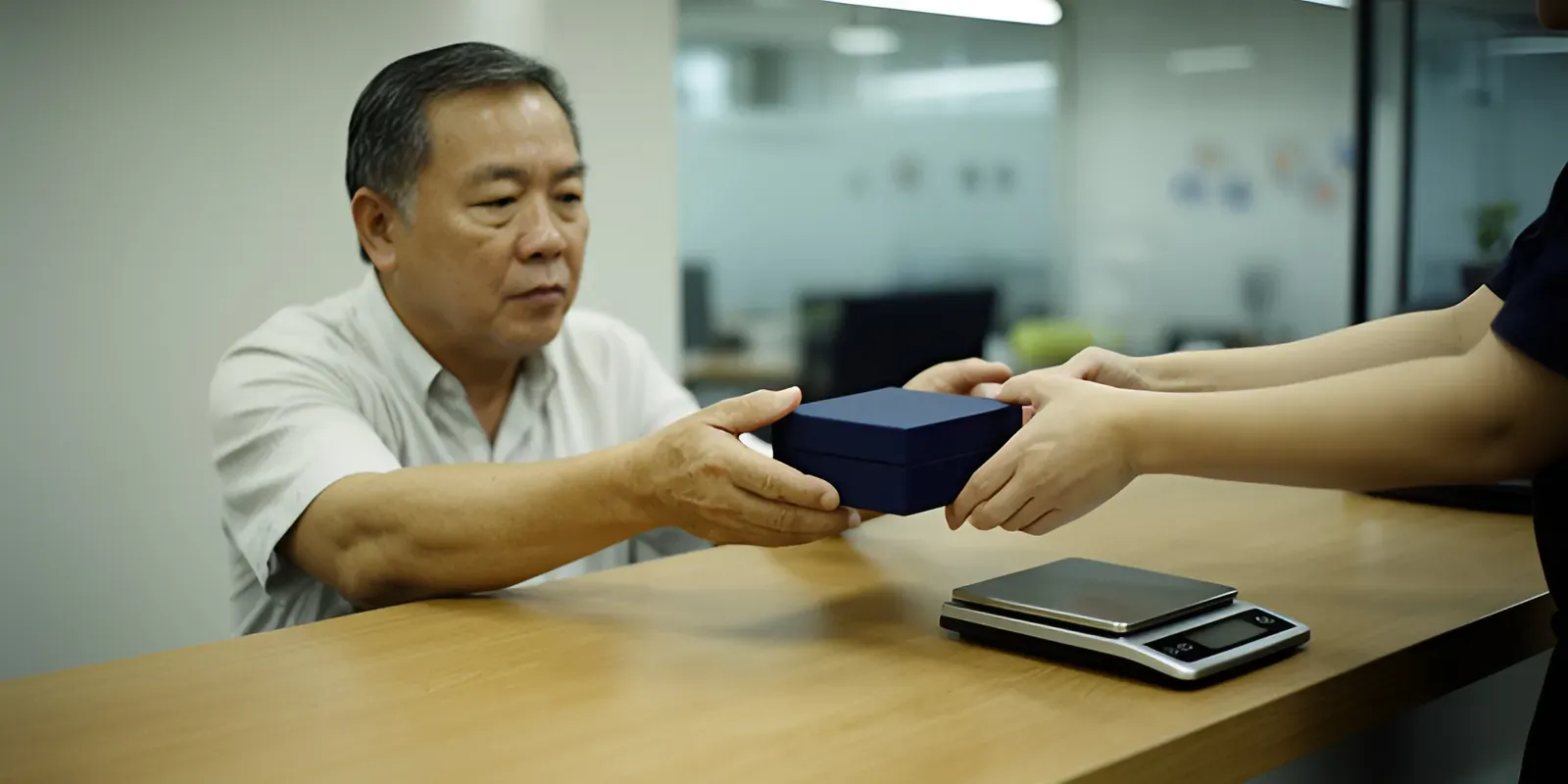
To sell gold in Singapore, you take bars, coins or jewellery to a dealer or bank that buys them back, show your identity document, accept the buy-back price quoted at that moment, and get paid by bank transfer or cash. The price will be below what you would pay to buy the same item that day. That gap, the buy-back spread, is the main cost of selling.
Gold prices can fall as well as rise; past performance is not a guide; gold pays no interest. This guide explains who buys gold back, how to work out what you lose to the spread, and what to bring.
Who Buys Gold Back in Singapore
| Seller | Who buys it | Terms worth knowing (as at November 2026) |
|---|---|---|
| Bars and coins from a bullion dealer | The dealer you bought from, or another dealer | BullionStar says it buys “all types of bullion” with no testing fee. Silver Bullion buys .999+ metal “regardless of where you bought it”. |
| Bars and coins from UOB | UOB, for its own gold only | Only items originally bought from UOB or OUB Singapore, with invoice and seal intact. For gold bought from 1 March 2025, only UOB current or savings account holders can sell it back. |
| UOB Gold Savings Account | UOB | Sold back at the bank’s buying price; no physical metal changes hands. |
| Jewellery | Goldsmiths, jewellers and some dealers | Usually priced on gold content only. See selling gold jewellery. |
| SGX gold ETF units | Other investors, through your broker | Sold on the exchange during market hours. See SPDR Gold Shares on SGX. |
Bullion dealers have to register with the Ministry of Law under the Precious Stones and Precious Metals (PSPM) Act. Banks are exempt because MAS regulates them. You can check a dealer on the Ministry of Law’s list of registered dealers, which also lists suspended and cancelled registrations. Our checklist for choosing a gold dealer covers what else to look at.
The short version: ask at least two buyers for a price on the same day, compare it with the spot price, and bring your ID and original paperwork. The buy-back spread is a real cost, so know it before you buy, not only when you sell.
How the Buy-Back Spread Works
Dealers sell above the spot price and buy below it. If you bought and sold the same item on the same day, the difference is what you would lose.
Our illustration, with round numbers: you buy a 100 g gold bar for S$17,450. The same dealer would buy it back today for $16,800.
- Spread: $650, or 3.7% of what you paid.
- Rise needed to break even: the buy-back price must climb from $16,800 to $17,450, a rise of 3.9%. Because the buy-back starts from a lower base, the rise needed is a little more than the spread.
Small bars and coins usually carry bigger premiums and spreads per gram than large bars. The gold premium calculator works out the spread and break-even for up to three quotes at once, and our guide to gold premiums explains where the gap comes from.
Getting a Fair Price When You Sell Gold
- Know the melt value first. Use the gold value calculator with today’s spot price, the weight and the purity. A buy-back quote is a percentage below that figure.
- Quote at the same moment. Prices move during the day, so compare quotes taken close together.
- Keep the item as it came. UOB requires the original seal. Damaged packaging or a broken seal can reduce what a dealer offers, or rule out a sale.
- Expect deductions on non-standard bars. BullionStar says bars that do not meet its criteria are bought at 1.5% to 6% below its normal buy-back price.
What to Bring and When You Get Paid
Registered dealers must carry out customer due diligence before a deal, under the Ministry of Law’s transaction rules. For cash or cash-equivalent deals above S$20,000, including linked sales on the same day, the dealer must file a Cash Transaction Report within 15 business days. If the dealer cannot complete its checks, it must not go ahead.
Bring your NRIC or passport, the original invoice and any certificate. Payment timing varies:
- Silver Bullion says sales above S$100,000 are paid within 2 to 5 business days, and since 7 March 2026 a 12-hour cooling-off period applies before paying a new payee.
- BullionStar’s terms and conditions allow up to 30 business days to pay out in some cases, and cancelling a confirmed sell order costs S$200 plus any price loss.
Ask about timing before you agree a price, especially for a large sale.
Tax When You Sell Gold
IRAS says gains from selling property, shares and financial instruments are generally not taxable for individuals, but gains from trading may be. The factors it lists include how often you buy and sell, why, and how long you hold. IRAS’s page does not mention gold specifically; if you buy and sell often, check how the rules apply to you.
What To Do Next
- Work out the melt value of what you hold with the gold value calculator.
- Ask the dealer you bought from, and one other registered dealer, for a buy-back quote on the same day.
- Check payment timing and any cancellation fee before you confirm.
- If you are deciding whether to sell at all, our comparison of gold vs stocks vs bonds sets out what gold does and does not do next to other assets.
- Do your own due diligence. This is general information, not a recommendation to buy or sell.