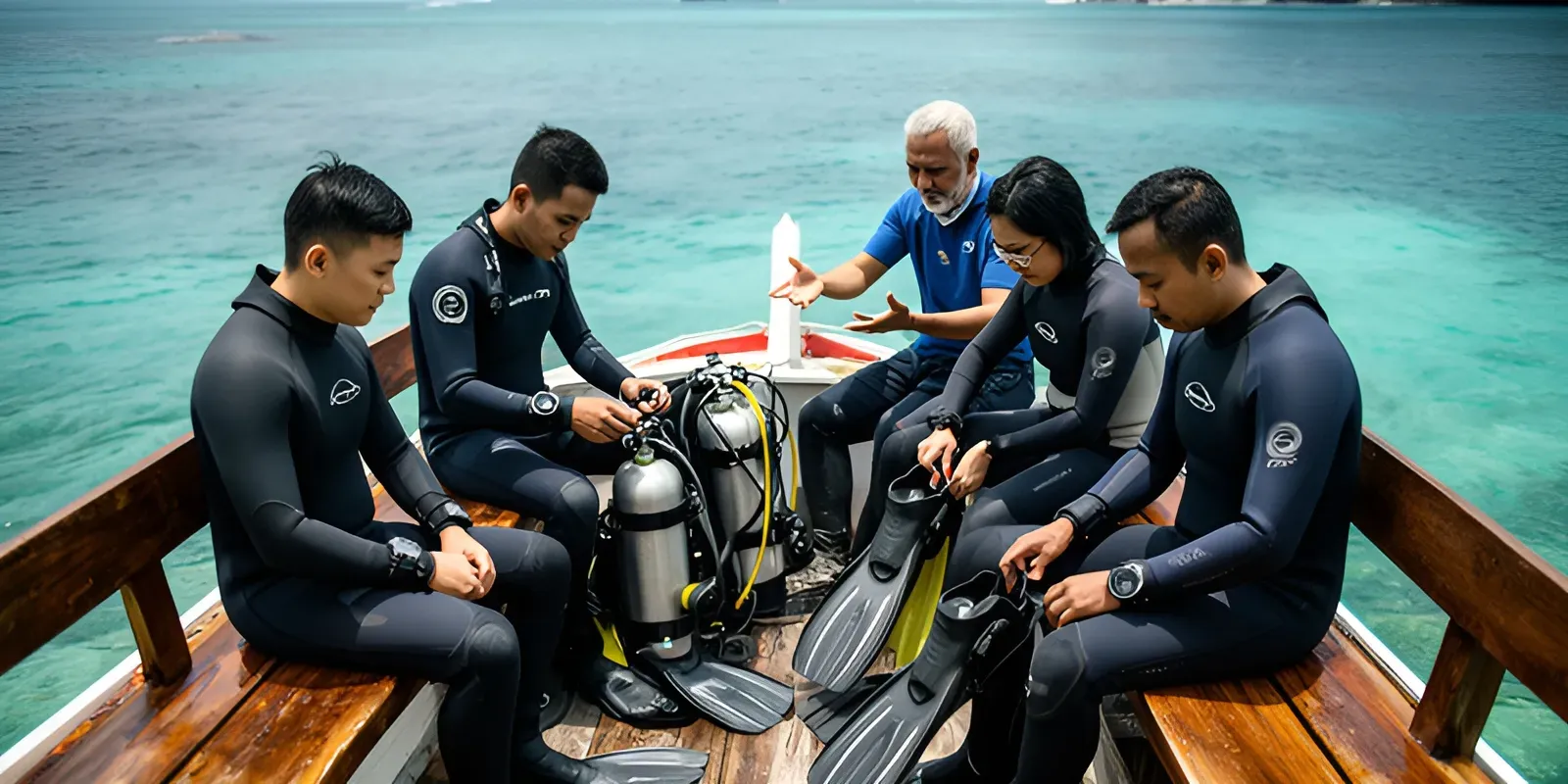
Yes, many Singapore travel insurance plans cover scuba diving, but only as a leisure activity, only to a set depth, and only if you dive within your certification with a qualified buddy or instructor. As at November 2026, the common limit is 30 metres. Break one of the conditions and a claim for a diving injury can be refused.
Travel insurance for scuba diving is about three checks: depth, certification and who is in the water with you.
How Diving Fits Into a Travel Policy
Most wordings start by excluding underwater activities that use breathing apparatus, then make an exception for leisure scuba diving.
Tiq’s wording is typical. It excludes “underwater activities which require the use of artificial breathing apparatus”. It then says the exclusion does not apply to leisure scuba diving no deeper than 30 metres under a qualified instructor, or by a PADI-certified diver within certified depth who is diving with a buddy or instructor holding a PADI certification.
If the exception applies, a diving injury is assessed under the ordinary sections: overseas medical expenses, emergency evacuation and personal accident. There is usually no separate “diving limit”.
How We Compared
We read the diving clauses in eight insurers’ policy wordings and noted the maximum depth, whether the cover is built in or optional, and the certification and buddy conditions. We did not compare prices. Add-on premiums depend on the trip.
Travel Insurance for Scuba Diving: The Rules by Insurer
| Insurer | Built in or add-on | Maximum depth | Certification and buddy rules |
|---|---|---|---|
| Income | Built in | Certified depth, capped at 30 m | Leisure only. PADI or similar and a certified buddy, or diving with a qualified instructor |
| FWD | Built in | Certified depth, capped at 30 m | No solo diving. Companion must hold an equal or higher certification |
| Tiq | Built in | 30 m | Under a qualified instructor; or PADI-certified, within certified depth, with a PADI-certified buddy or instructor |
| HL Assurance | Built in | Certified depth or 30 m, whichever is shallower | Supervised by a qualified instructor; diver holds PADI or equivalent |
| MSIG TravelEasy | Elite and Premier only | Certified depth, capped at 30 m | Licensed operator; accompanied at all times by a qualified dive instructor or dive master |
| Singlife | Adventurous Water Sports add-on | 40 m with PADI or similar; 30 m without | Uncertified divers: accredited course, under direct supervision of a qualified instructor |
| DirectAsia Voyager | Adventure Cover add-on | 30 m | With a diving school or qualified instructor |
| Starr TraveLead | Built in, per Starr’s FAQ; separate scuba add-on for trip costs | No depth limit stated in the FAQ; the add-on’s refund needs 18 m with an instructor or guide, or certified depth | See below |
Notes on three rows
MSIG. Scuba diving sits in the adventurous activities section, which applies to the Elite and Premier plans only. The general exclusions otherwise rule out underwater activities with breathing apparatus.
Singlife. Diving with breathing apparatus is listed in the optional Adventurous Water Sports section. The summary of cover shows the add-on with its own medical limit of S$250,000 in aggregate and an accidental death and disablement limit of $50,000. Singlife’s general exceptions exclude scuba diving unless this option is shown on your schedule, so a diver needs the add-on.
Starr. The scuba add-on in the specimen dated 5 August 2025 is a trip-cost benefit. It pays irrecoverable dive tour costs of up to $2,500 if a doctor certifies you unfit to dive, and up to $1,500 for hiring equipment if yours is lost, stolen, delayed or damaged. Separately, Starr’s FAQ says TraveLead covers amateur hazardous sports, including scuba diving, with “no restriction on height or depth”. Confirm that against the policy wording before a deep dive.
The short version: The insurer’s depth limit is the shallower of your certification depth and its own cap, usually 30 metres. A dive to 35 metres is uninsured at most insurers even if your certification allows it.
A Worked Example: Same Dive, Different Outcomes
Illustration only. Three friends dive a wreck at 32 metres on a liveaboard trip. All hold advanced certifications. One develops decompression sickness, and treatment plus evacuation costs a hypothetical $45,000.
- On a plan with a 30-metre cap, the dive was 2 metres too deep. The insurer can decline the $45,000.
- On a plan or add-on with a 40-metre limit for certified divers, the depth condition is met and the claim is assessed, up to the diving section’s own limit.
- If the diver had gone down alone, FWD’s wording would exclude the claim regardless of depth.
A dive computer log is the evidence in each case. It records the depth the insurer will ask about.
Conditions Beyond Depth
- Leisure only. Income covers scuba diving only “for leisure purposes”. Paid work as a dive guide or instructor is outside every plan here.
- Stay within your card. Income, FWD, MSIG and HL Assurance all cap cover at the depth on your certification. An Open Water diver following friends deeper is outside cover.
- Cave diving is excluded. Income and Singlife both name it as an excluded extreme activity.
- Operator’s rules. Income excludes any activity done against the operator’s health and safety rules.
- Equipment. Singlife’s water sports add-on covers loss of water sports equipment up to $3,000, with a $1,000 limit per article and a $250 excess.
One question none of the product pages answers plainly is whether hyperbaric chamber treatment has a sub-limit. Ask before a dive-heavy trip.
The Catch, and Who It Does Not Suit
Standard travel insurance does not suit:
- Technical and deep divers. Anything past 30 metres, or 40 metres on Singlife’s add-on, is outside cover at most insurers here. Decompression diving, cave diving and wreck penetration need specialist dive insurance.
- Dive professionals. Instructors and divemasters working for pay are excluded.
- Solo divers. FWD excludes solo diving, and the other wordings require a buddy or instructor.
- Divers with certain medical conditions. A diving illness linked to a condition treated in the past 12 months falls under the pre-existing conditions exclusion.
Many divers carry a dedicated dive accident policy as well as travel insurance. The two do different jobs: one is built around chamber treatment and dive emergencies, the other around cancellations, baggage and general illness.
What To Do Next
- Check your certification card for your depth limit and plan dives within the shallower of that and the insurer’s cap.
- Search the policy wording for “scuba”, “breathing apparatus” and “metres” before you buy.
- Keep your certification card, logbook and dive computer data. You will need them for a claim.
- Read how evacuation is paid in our guide to travel insurance medical coverage, and compare insurers in the travel insurance comparison.
- Combining a dive trip with a volcano hike? See travel insurance for hiking and trekking.
- Liveaboards and island dive shops often charge in foreign currency. Our guide to paying overseas explains the fees.
- If you are unsure whether a dive is covered, ask the insurer in writing.