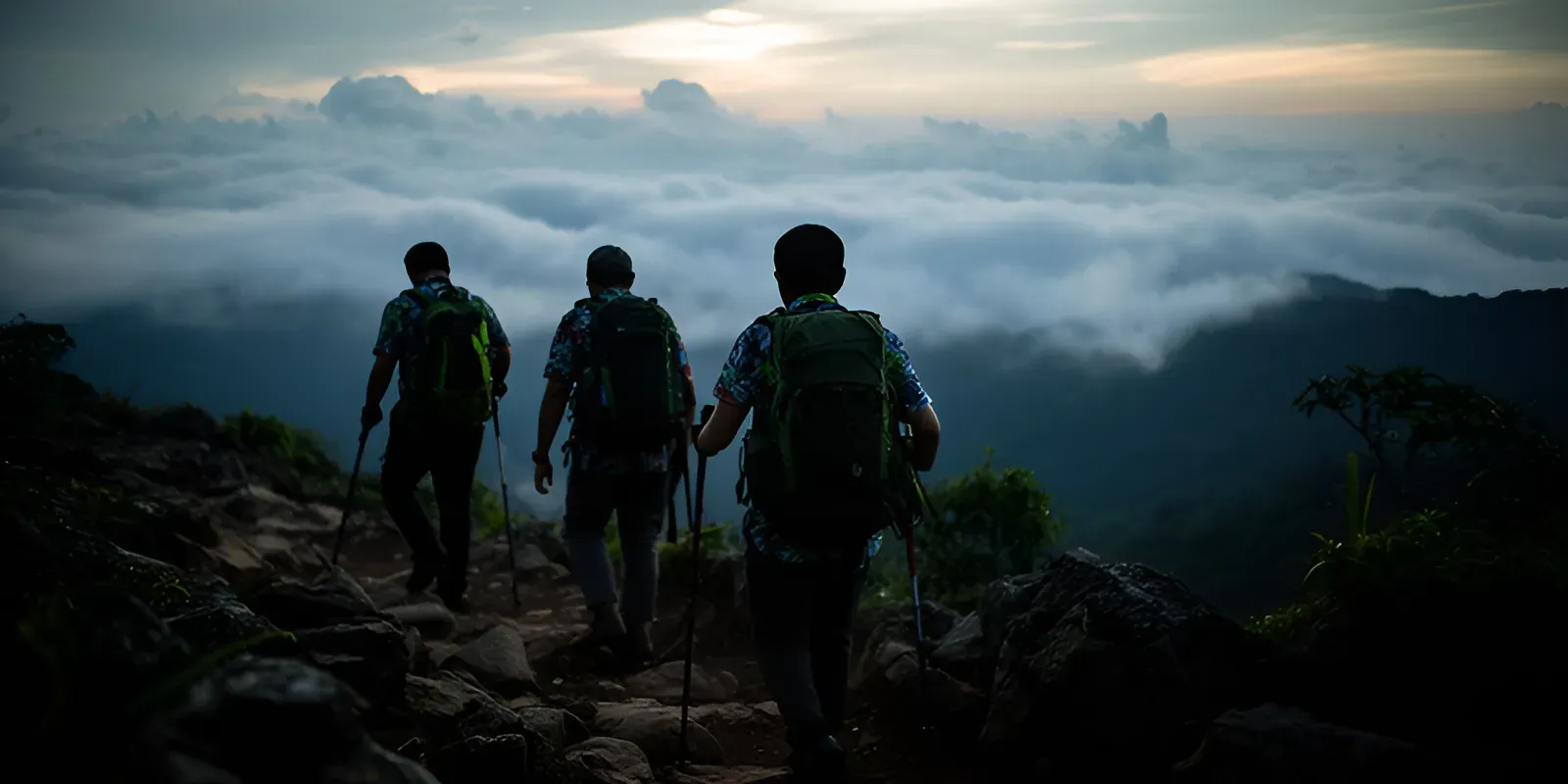
Travel insurance covers hiking and trekking only up to a stated altitude, and only if you follow the conditions on guides and safety. As at November 2026, the limit is 3,000 metres at four Singapore insurers we checked, 4,000 metres at three and 6,000 metres at one. Above the line, you are uninsured for the trek, including the rescue.
That matters for popular routes. The summit of Mount Kinabalu is roughly 4,095 metres and Mount Fuji roughly 3,776 metres. Both are above a 3,000-metre limit.
Why Insurers Draw a Line on Adventure
The General Insurance Association of Singapore lists “engaging in hazardous, military or sports activities” among the exclusions commonly found in travel policies. Insurers then carve out ordinary tourist activities from that exclusion.
Singlife’s wording explains the idea. It covers “the usual tourist activities that are accessible to the general public without restriction”, as long as you obey the rules and act under the guidance of the operator’s qualified guides. It excludes activities that need a high level of expertise, exceptional exertion or highly specialised gear.
A day hike on a marked trail is on one side of that line. A roped ascent is on the other.
How We Compared
We searched each insurer’s policy wording for its rules on hiking, trekking and mountaineering, and recorded the altitude limit, which plan tiers it applies to, and the conditions attached. Eight insurers publish enough to compare. We did not rate the plans. A higher altitude limit is only “better” if your route needs it.
Travel Insurance for Hiking and Trekking: The Altitude Table
| Insurer | Trekking covered up to | Applies to | Conditions and related exclusions |
|---|---|---|---|
| Income | Below 6,000 m | All standard plans | Leisure only; open to public, or run by a recognised operator, or with licensed guides. Mountaineering and outdoor rock climbing excluded |
| Singlife | 4,000 m | All plans | Guided tourist activities. Outdoor rock climbing, abseiling, canyoning, mountain biking excluded |
| DirectAsia Voyager | 1,500 m; up to 4,000 m with Adventure Cover | Add-on | Add-on also lists rock climbing with harness and ropes |
| FWD | 3,000 m | All plans | Licensed commercial operator. Mountaineering, technical climbing and multi-day biking expeditions classed as extreme sport |
| Tiq | 3,000 m | All plans | Mountaineering or rock climbing needing ropes and climbing equipment excluded; expeditions excluded |
| MSIG TravelEasy | 3,000 m | Elite and Premier only | Licensed operator, leisure only. Standard and Lite exclude hiking and trekking |
| HL Assurance | 3,000 m | All plans | Mountaineering and rock climbing that ordinarily needs ropes or guides excluded |
| Great Eastern GREAT TravelCare | Below 4,000 m | Gold and Platinum only | Leisure only; must be under the guidance and supervision of qualified guides or instructors |
Two rows deserve a second look.
MSIG’s lower tiers exclude trekking altogether. Its adventurous activities section applies to the Elite and Premier plans only. The general exclusions list “hiking or trekking” unless covered by that section.
DirectAsia’s base plan stops at 1,500 metres. Its wording lists hiking, mountaineering or trekking above 1,500 metres as needing the optional Adventure Cover, which then extends cover up to 4,000 metres.
Four other insurers we review are not in the table. Allianz Travel’s wordings exclude any activity that goes above 4,500 metres. Tokio Marine’s wordings cover hiking or trekking up to 4,500 metres, and UOI’s exclude trekking above 3,000 metres. Starr’s FAQ says its cover extends to amateur hazardous sports with “no restriction on height or depth”; confirm that against the policy wording before a high trek.
The short version: Find the highest point on your route, in metres, and compare it with the number in the policy wording. If the summit is above the limit, a claim for an injury or rescue on that trek can be refused, however good the rest of the plan is.
A Worked Example: Three Routes, Three Answers
Illustration only. Altitudes are approximate; confirm your own route with the park authority or guide.
- Mount Fuji summit, Japan (about 3,776 m). Outside a 3,000-metre limit. Inside a 4,000-metre or 6,000-metre limit.
- Mount Kinabalu summit, Sabah (about 4,095 m). Outside the 3,000-metre and 4,000-metre limits. Inside a 6,000-metre limit.
- Everest Base Camp trek, Nepal (about 5,364 m). Outside the 3,000-metre and 4,000-metre limits. Inside a 6,000-metre limit.
Now put a cost on it. Suppose a trekker on the Kinabalu summit trail breaks a leg and the rescue and hospital bill comes to S$20,000, a made-up figure. With a 6,000-metre limit and the guide conditions met, the claim is assessed under the medical and evacuation benefits. With a 3,000-metre limit, the insurer can decline the whole $20,000.
The premium difference between plans is small next to that.
The Conditions That Trip People Up
The altitude is the headline. These smaller conditions decide claims too.
- Guides and operators. FWD excludes sporting activities “not managed by a licensed commercial operator”. MSIG requires a licensed operator. Income accepts a place open to the general public without restriction, a recognised commercial operator, or licensed guides.
- Safety rules. Income, Singlife and FWD all require you to follow the operator’s safety procedures and wear the recommended equipment.
- Leisure only. Competitions and anything with prize money or sponsorship are excluded across the wordings.
- Ropes change the category. Once a climb needs ropes or technical gear, Tiq, HL Assurance and FWD treat it as mountaineering or an extreme sport.
- Expeditions. Income excludes expeditions to remote or previously unexplored areas unless on a leisure tour run by a recognised commercial operator. Tiq excludes expeditions outright.
- Races. Singlife excludes marathons and triathlons. MSIG’s Elite and Premier plans cover a marathon up to 42.195 km. Trail-running events need their own check.
The Catch, and Who It Does Not Suit
Standard travel insurance does not suit:
- High-altitude climbers. No insurer in our table covers trekking at 6,000 metres or above, which rules out the major Himalayan summits. Specialist expedition cover is a different product.
- Technical mountaineers and ice climbers. Roped and technical climbing is excluded almost everywhere here.
- Independent trekkers in restricted or remote areas. Without a licensed operator, several wordings do not respond.
- Anyone with a heart or lung condition. Altitude illness linked to a pre-existing condition falls under the pre-existing conditions exclusion.
Altitude sickness on a covered trek is treated like any other illness under the medical section. On an excluded trek, it is not covered at all.
What To Do Next
- Write down the highest point of your route and every activity planned, including the “optional” summit push.
- Search the policy wording for “metres”, “trekking” and “mountaineering”, and read the general exclusions.
- Book with a licensed operator and keep the booking confirmation. It is evidence if you claim.
- Check the evacuation limit in our guide to travel insurance medical coverage, and compare plans in the travel insurance comparison.
- Diving on the same trip? See travel insurance for scuba diving.
- Remote lodges often take cash or add card surcharges. Read our guide to paying overseas before you go.
- If your route is unusual, ask the insurer in writing whether it is covered.