Car insurance in Singapore is compulsory. Every vehicle on the road must carry at least third-party liability cover for death and bodily injury, and you cannot renew road tax without it. Beyond that minimum, what you pay and what you receive after an accident depend on four things: the type of cover, your No-Claim Discount, your excess and whether you follow the claims rules.
This guide explains each one, using the rules published by LTA and the General Insurance Association of Singapore (GIA), and ends with what new car owners need to settle before collecting the keys.
What the Law Requires
LTA sets three rules worth knowing.
- Cover at all times. The minimum is third-party liability for deaths and bodily injury.
- Cover for the full road tax period. Your insurance must run for the whole period you are renewing. For online renewal, buy the policy at least one working day ahead.
- Tell your insurer about changes. If the car is modified, or its use changes, such as a private car becoming a private-hire car, the insurer must be updated.
Using a vehicle without valid insurance is an offence. LTA lists a fine of up to S$1,000, up to three months’ imprisonment, or both, and disqualification from driving for at least 12 months.
The Three Types of Car Insurance in Singapore
| Type of cover | Injury to others | Damage to others’ property | Fire and theft of your car | Accident damage to your car |
|---|---|---|---|---|
| Third party only | Yes | Yes | No | No |
| Third party, fire and theft | Yes | Yes | Yes | No |
| Comprehensive | Yes | Yes | Yes | Yes |
Source: GIA motor insurance consumer guide.
The GIA says comprehensive cover also includes windscreen damage and, for private cars, personal accident and medical expenses. Flood and windstorm damage, NCD protection and passenger cover may be optional extras that cost more. Check the policy, because insurers differ.
The short version: The law asks only for third-party injury cover. Most owners buy comprehensive. Your premium then turns on your No-Claim Discount, the excess you accept, who drives and where the car may be repaired.
How the No-Claim Discount Works
The No-Claim Discount (NCD) rewards each year without a claim. The GIA’s scale for private cars:
| Claim-free years | NCD | NCD after one claim |
|---|---|---|
| 1 | 10% | 0% |
| 2 | 20% | 0% |
| 3 | 30% | 0% |
| 4 | 40% | 10% |
| 5 or more | 50% | 20% |
Two or more claims in one year reduce it to zero. Motorcycles and commercial vehicles have a shorter scale that tops out at 20%.
Other points from the GIA:
- It belongs to you, not the car. NCD follows you to a replacement car and to a new insurer. A first-time owner starts at 0%.
- One car at a time. NCD applies to one vehicle. A second car earns its own from 0%.
- Breaks in ownership. If you sell and buy again later, most insurers keep your NCD for a break of up to 24 months, and some for 12.
- Not at fault. If you are found totally not at fault in an accident with another vehicle, your NCD may not be affected.
- NCD protector. An optional extra that lets you make one claim and keep your NCD when you renew with the same insurer. It may not carry over to a new insurer, and it does not stop an insurer from declining to renew.
What one claim costs over the following years, and when a small claim is not worth making, is worked through in our guide to comparing car insurance and keeping the premium down.
Excess, Named Drivers and Workshops
Excess is the amount you pay on each claim. The GIA says it is generally higher where the insurer carries more risk, and a different excess may apply when someone other than you is driving.
Named drivers. Cheaper policies may limit cover to the main driver and named drivers. Others cover any authorised driver with a valid licence. Your Certificate of Insurance states who may drive. Declare every regular driver: young or newly licensed drivers usually carry an extra excess, and leaving one out is not a saving if a claim is later disputed.
Workshops. Some policies require repairs at the insurer’s authorised workshops. Others let you choose. The GIA notes that policies may also set rules on the use of reconditioned parts.
Insurers must highlight the premium, the excess for each type of driver, the risks covered and any driver restrictions before you buy. If any of these is unclear on the quotation, ask.
What to Do After an Accident
The industry’s Motor Claims Framework applies to every accident, however small. The GIA sets out three steps.
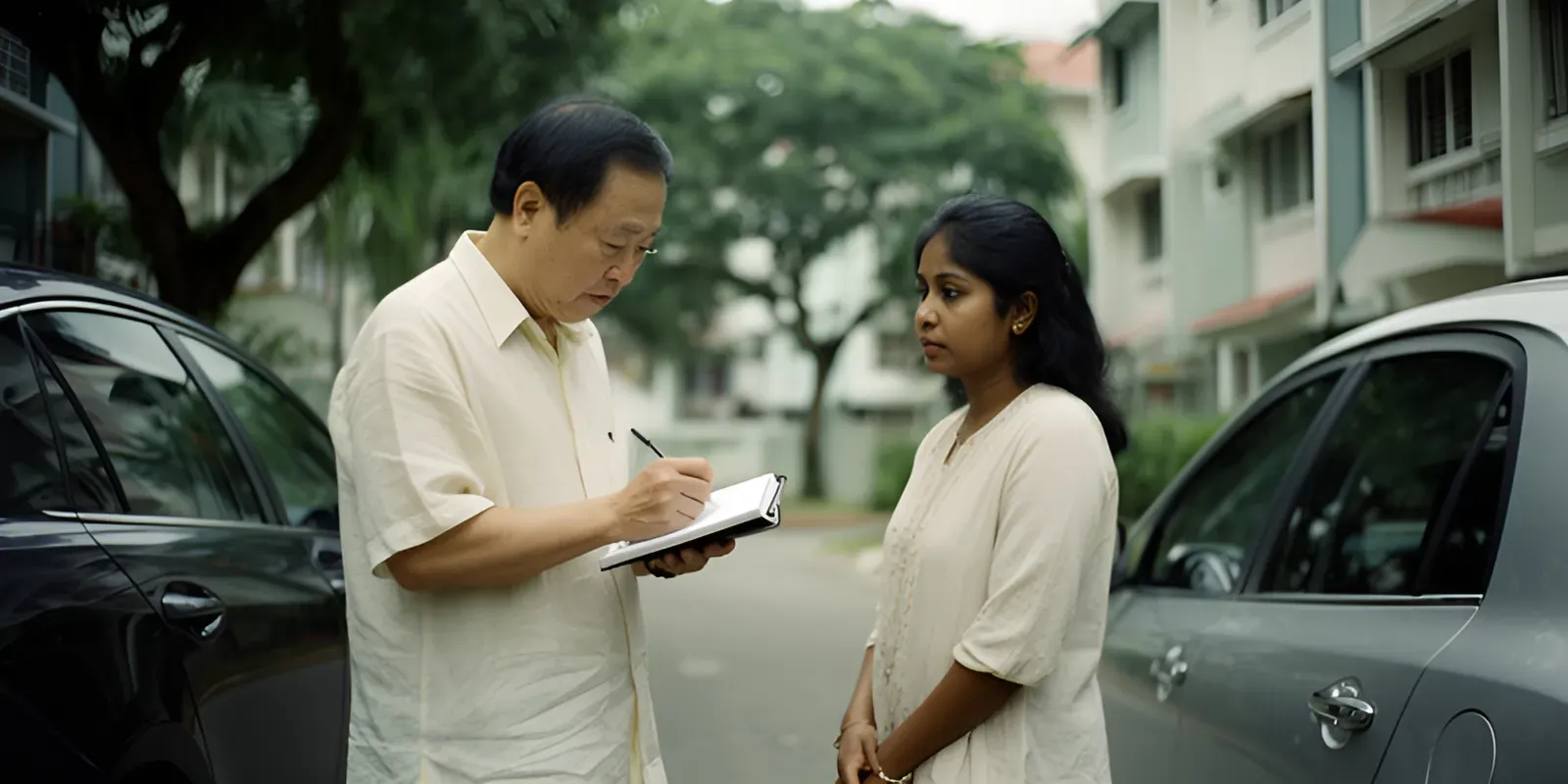
- Exchange particulars with the other driver and note the vehicle numbers. Take photographs of the scene and the damage before moving the vehicles.
- Call your insurer’s hotline for a tow truck or advice. Do not deal with unauthorised tow-truck operators or repairers at the scene.
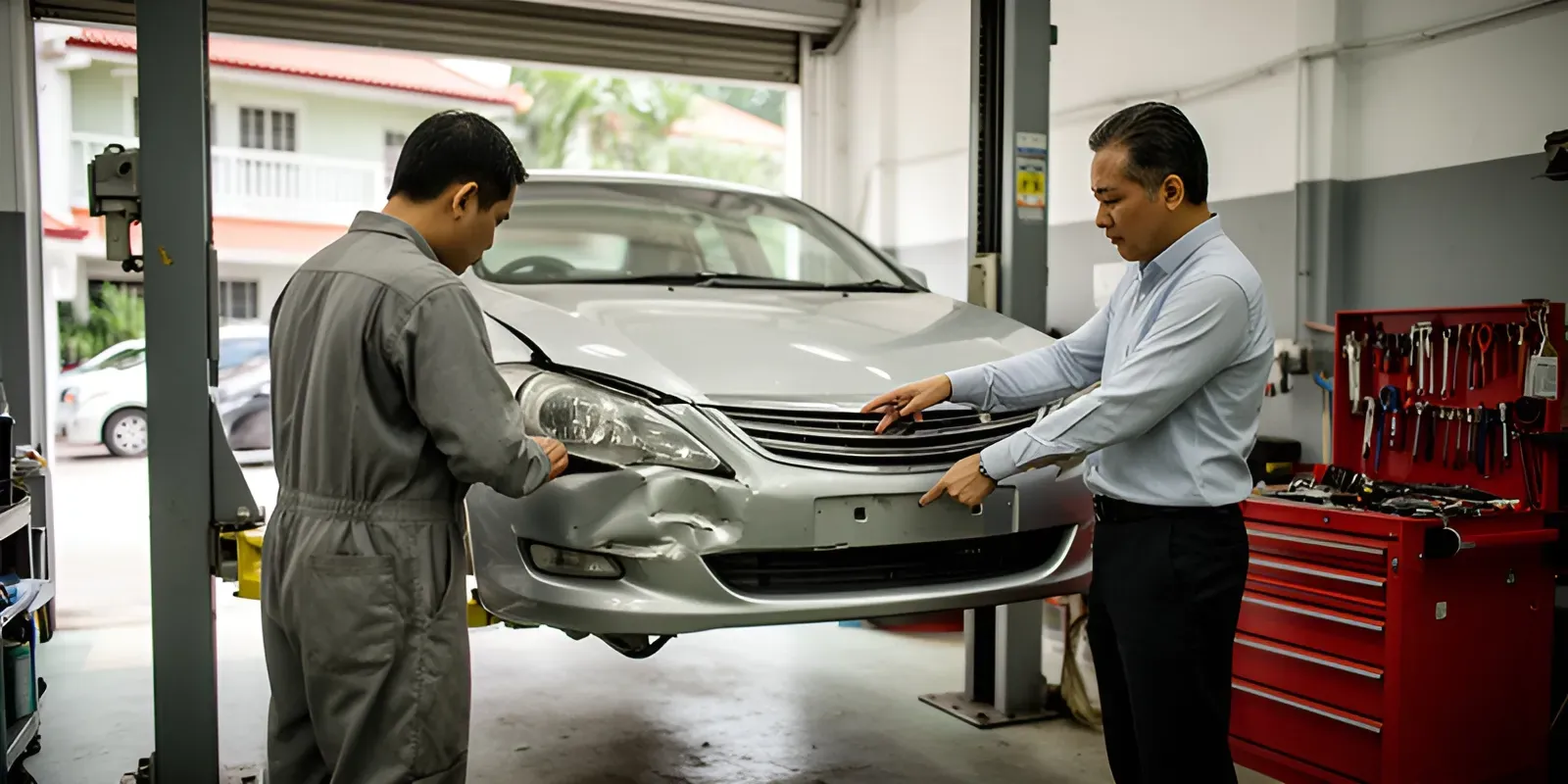
- Report to your insurer within 24 hours or by the next working day, and take the car, damaged or not, to an approved reporting centre or authorised workshop.
You must report even if you settle privately, because the other party can still claim later.
If anyone is injured, call for medical help and the police. The GIA lists cases that also need a Traffic Police report, including a fatality, a hit-and-run, damage to government property, a foreign vehicle, or a pedestrian or cyclist being involved.
If you do not report
The GIA says an insurer may refuse the claim, cancel the policy, decline to renew it, or take away your NCD. Its Motor Claims Framework FAQ adds that a late report is not penalised where there is a valid reason, such as a serious accident in Malaysia, and that the deadline runs to the end of the next working day.
If you disagree, or your insurer fails
For a dispute over a claim, start with the insurer’s own complaints process. The GIA’s website explains the next steps.
The Policy Owners’ Protection Scheme covers compulsory motor insurance and personal motor policies, according to MoneySense. It is run by the Singapore Deposit Insurance Corporation.
Insuring a New Car
New car insurance has to be in place before the car goes on the road, and the choices made in the week you sign the sales agreement shape the premium for years.
The dealer’s insurance quote
Many dealers arrange insurance as part of the sale. It is convenient, and the policy can be ready for registration day. It is still one quote among many.
- Ask for the car’s price with and without the dealer’s insurance, in writing. If a discount depends on taking it, you can then see what that discount is worth.
- Ask which insurer and which plan, then check that insurer’s own page for the workshop rule and the excess.
- Ask what happens at renewal. After the first year you can normally move to any insurer. Confirm nothing in the sales or loan agreement says otherwise.
- Tell the new insurer about your NCD early, and if your old policy is still running, ask how the changeover is handled so neither car is left uninsured.
An illustration, with hypothetical figures. A dealer offers $1,000 off the car if you take their insurance at $2,400 for the first year. Another insurer quotes $1,700 for the same cover. The package costs $700 more in premium but saves $1,000 on the car, so it is $300 ahead in year one. Had the outside quote been $1,300, it would be $100 behind. The comparison only works if you have both numbers.
What a car loan requires
If you buy on hire purchase, read the loan agreement. Lenders commonly ask for comprehensive cover for as long as money is owed, with their interest noted on the policy. That is a term of the loan, not of the law. Our car loan guide covers the loan itself.
If the car is written off in the first years
A comprehensive policy generally pays the car’s market value at the time of the loss. A new car loses value quickly, and early in a loan the amount owed can be higher than that value. Income’s page states the position plainly: where a car loan is outstanding, the payout goes to the finance company, and you settle any shortfall with them.
Some insurers offer new-for-old or gap benefits aimed at this. As at November 2026:
- Singlife describes a new-car replacement benefit when repair costs exceed 70% of market value, for cars under 12 months old on its Lite and Standard plans and under 24 months on Prestige.
- Tiq by Etiqa lists an optional Gap Cover add-on, of up to $80,000, for the difference between the car loan and the market value after a total loss.
Terms and conditions apply to both. Read the policy wording for what counts as a total loss and what is excluded.
Warranty and workshop choice
A new car comes with a manufacturer’s or dealer’s warranty. Read its terms on accident repairs before choosing a plan. If the warranty depends on repairs at the agent’s workshop, a plan that allows it may be worth the extra; if not, an authorised-workshop plan may serve just as well.
What To Do Next
- Read your policy schedule for four items: cover type, NCD, excess for each kind of driver, and the workshop rule.
- Save your insurer’s accident hotline in your phone, and keep a note of the 24-hour reporting rule in the car.
- Comparing plans or renewing? See how to compare car insurance plans and lower your premium, with five insurers’ workshop and NCD terms side by side.
- Buying a car? Work out the full cost of owning a car in Singapore, including insurance, road tax and the loan.
- Add the yearly premium to our monthly budget planner so the renewal is already set aside.