When you sell gold jewellery in Singapore, you are usually paid for the gold it contains and nothing more. A 916 chain is valued on its weight times 91.6% times the day’s gold price, less the buyer’s margin. The workmanship, the design and the GST you paid when you bought it do not come back.
That makes jewellery an expensive way to hold gold, even if it is a lovely way to wear it. Gold prices can fall as well as rise; past performance is not a guide; gold pays no interest. Here is how the price is worked out, what to check, and how pawning compares.
How 916 Gold Jewellery Is Priced
A karat is one part in 24. The World Gold Council lists 18 carat as .750 and 24 carat as .999. Most gold jewellery sold in Singapore is 22 karat, which is 22 parts in 24, about 91.67%, and is stamped 916. Our guide to gold purity and karats covers the other marks.
To value a piece:
- Weigh it in grams (without stones).
- Multiply by the purity: 0.916 for 916.
- Multiply by the price of a gram of pure gold today.
The result is the melt value. A buyer then offers something below it to cover testing, refining and its margin.
Worked Example: Selling a 20 g Chain
Our illustration, with assumed numbers. You have a 20 g necklace stamped 916, and today’s gold price is S$5,300 a troy ounce, or about $170.40 a gram of pure gold.
| Step | Figure |
|---|---|
| Pure gold in the chain (20 g × 0.916) | 18.32 g |
| Melt value (18.32 g × $170.40) | about $3,122 |
| Offer at an assumed 5% below melt | about $2,966 |
If you bought that chain with a workmanship charge and 9% GST on top, the gap between what you paid and the offer can be large. IRAS treats jewellery as non-investment precious metal, so GST applied when you bought it; the GST exemption covers only qualifying investment bars and coins.
Try your own pieces in the gold value calculator: choose 916, enter the weight and today’s price, and set the buyer’s discount to the one you are quoted.
The short version: jewellery sells for its gold content, not what you paid. Know the weight, the purity and today’s gold price before you walk in, and get more than one quote.
What Buyers Check
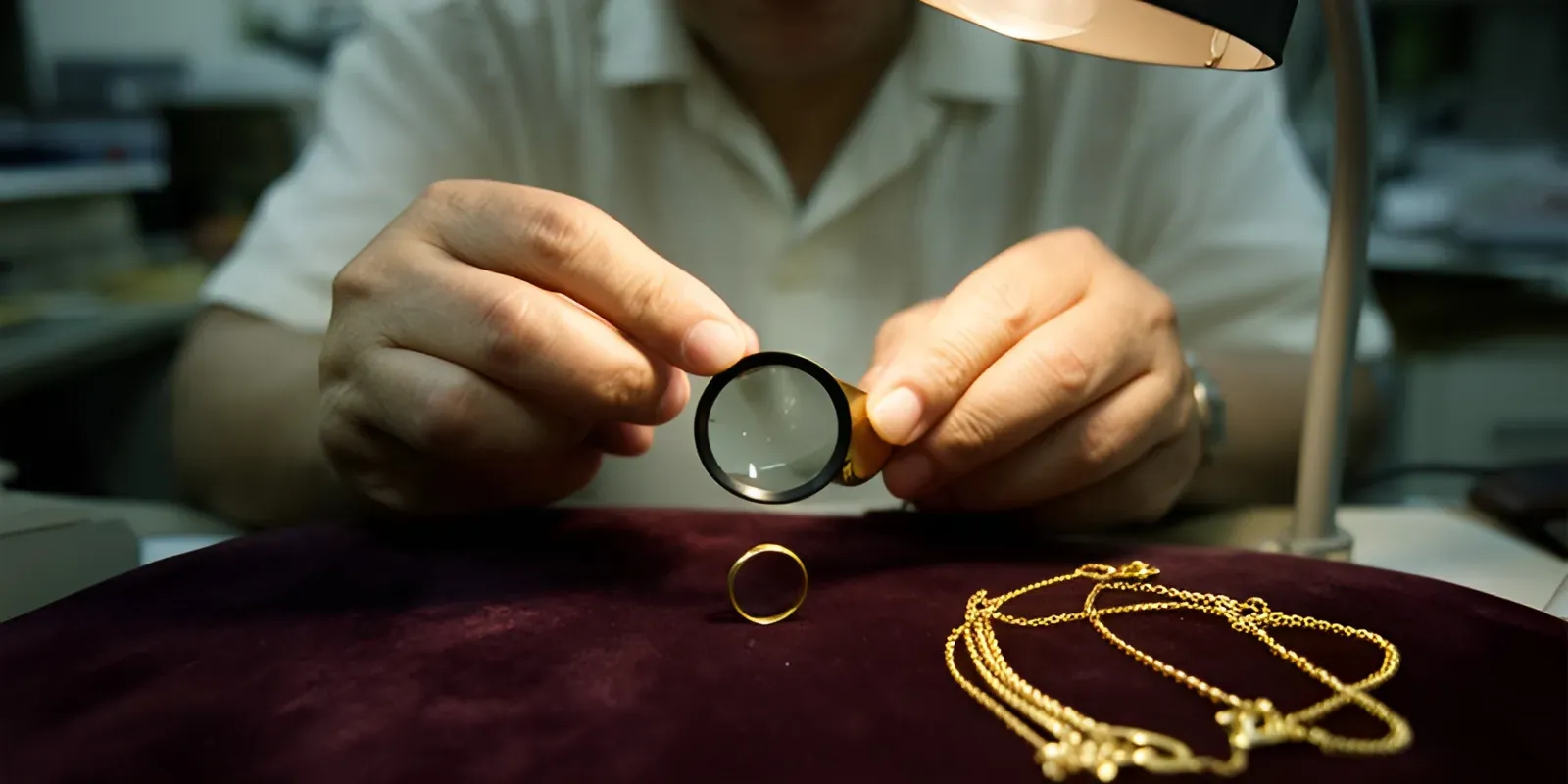
- Purity: buyers test the metal. If the stamp is missing or the test shows lower purity, the offer drops.
- Gemstones and other parts: stones, enamel and non-gold clasps add weight but not gold. Buyers deduct them, and may not pay for the stones at all.
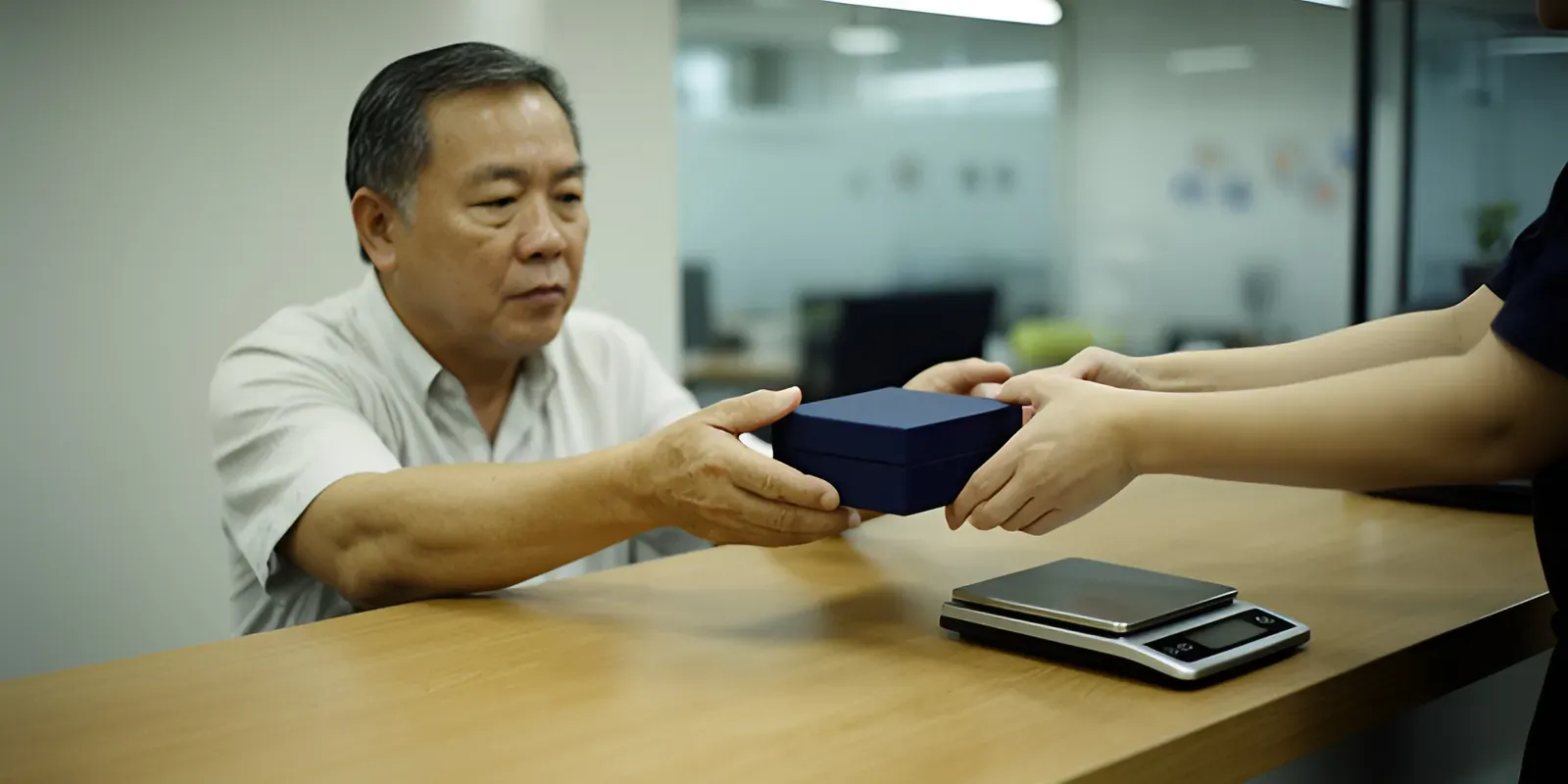
- Identity: jewellery shops that buy and sell gold are regulated dealers under the Precious Stones and Precious Metals Act, so expect to show your NRIC. You can check a buyer on the Ministry of Law’s list of registered dealers.
Pawning vs Selling Gold Jewellery
Pawning is a short-term loan with your jewellery as security. You keep the right to get it back if you repay. Pawnbrokers are regulated by the Ministry of Law’s Registry of Pawnbrokers, whose rules for pawners say:
- The maximum interest rate is 1.5% a month.
- You have six months to redeem, which can be extended if you and the pawnbroker agree.
- For pledges made from 1 April 2015, unredeemed items are forfeited, not auctioned.
- The pawnbroker must serve a Notice of Forfeiture within two months after the redemption period ends, and you then have one month to redeem.
At the maximum rate, borrowing $2,000 for six months costs up to about $180 in interest. That can make sense if you need cash briefly and want the piece back. If you do not intend to redeem it, selling at a quoted price is more transparent than letting a pledge lapse, because once it is forfeited the piece is no longer yours to sell.
When Selling Gold Jewellery Makes Less Sense
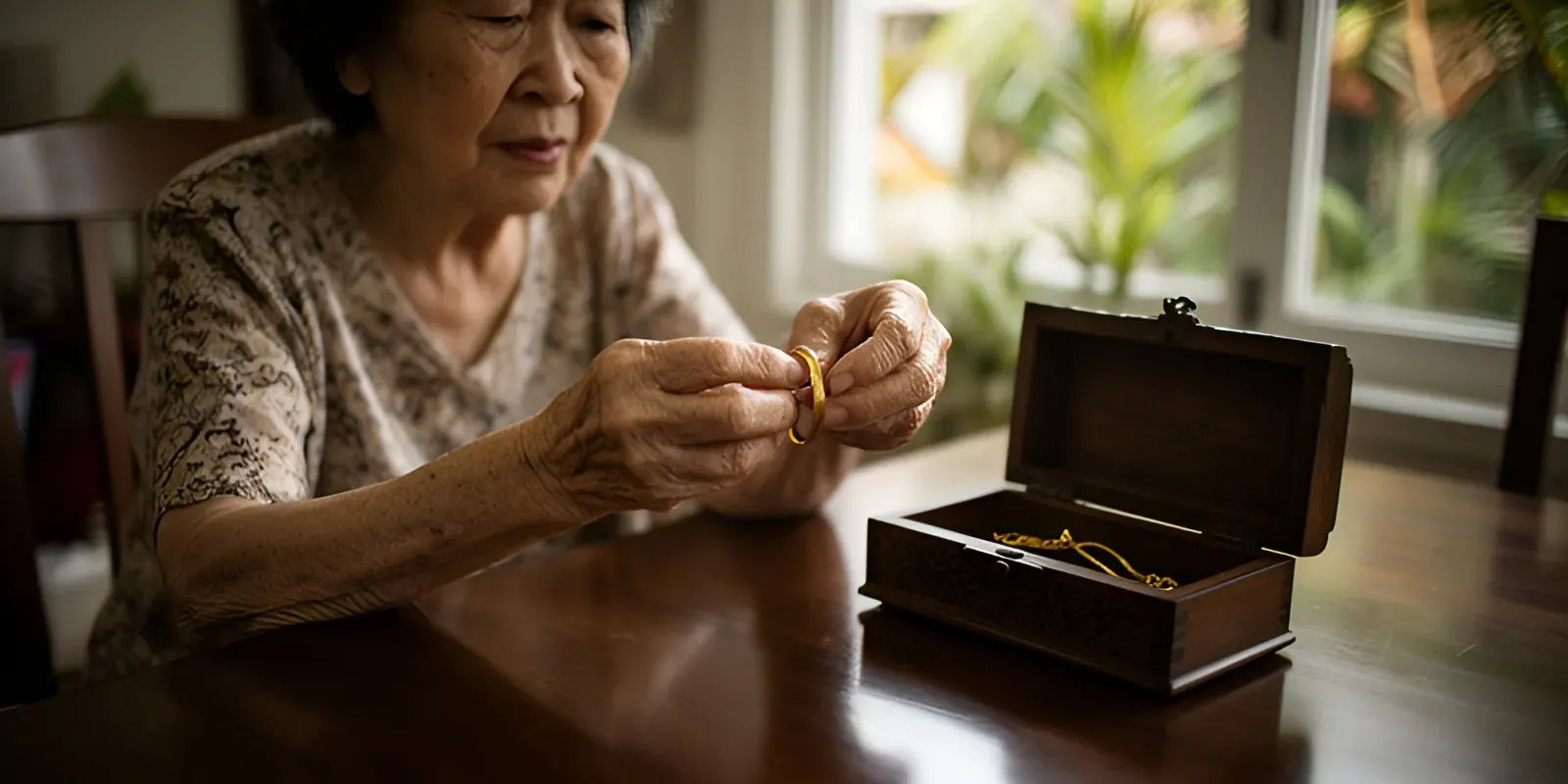
- Sentimental or heirloom pieces: the money is only the gold content.
- Designer or antique pieces: a goldsmith may pay melt value for something a specialist reseller values more.
- Short-term cash needs: pawning, or simply waiting, may cost less than selling and buying again later.
If you are thinking of turning old jewellery into investment gold, compare the costs first. Our guides on how to sell gold and how to buy gold in Singapore explain the spreads on both sides.
What To Do Next
- Weigh your pieces and note the stamps, then estimate the melt value with the gold value calculator.
- Get at least two quotes on the same day and ask how stones will be treated.
- If you only need cash for a few months, read the pawn ticket’s expiry date and interest rate before you sign.
- Read gold bars vs gold coins before putting the proceeds into investment gold.
- Do your own due diligence. This is general information, not a recommendation to buy or sell.