Card skimming overseas is one of several ways travellers lose money abroad, alongside fake visa websites, rigged “pay in SGD” prompts and stolen phones. Most of the damage can be prevented with a few settings before you leave and a few habits while you are away. If something does go wrong, reporting quickly to your bank is what protects you most.
This guide covers the main traps, the settings to switch on, and what to do in the first hour after you spot a problem.
How Card Skimming Overseas Works
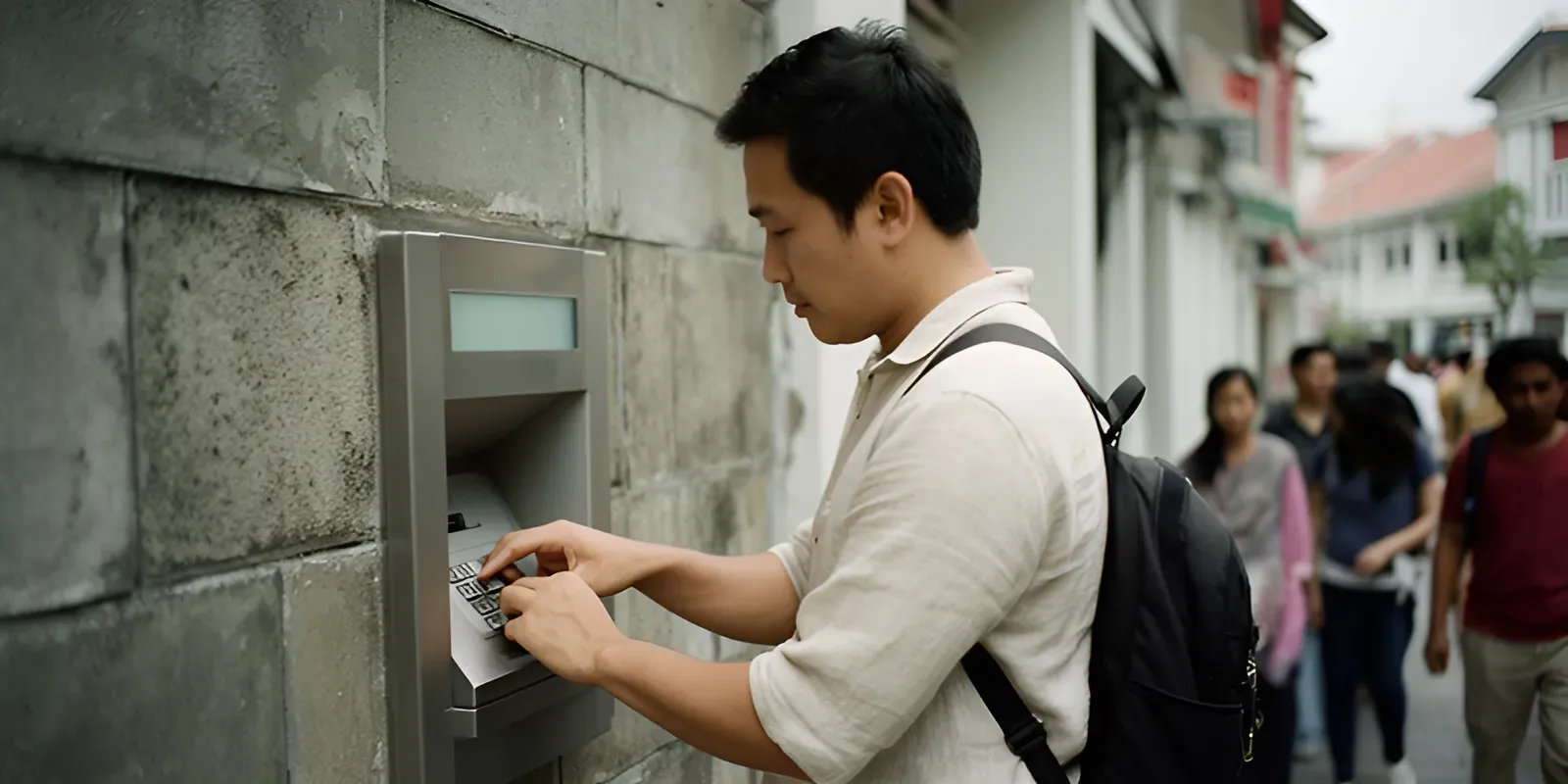
Skimming copies your card’s details, usually at a card reader or ATM that has been tampered with. A hidden camera or fake keypad may capture your PIN. The copied details are then used elsewhere, sometimes days later.
You cannot always spot a tampered machine, so the defences are layered:
- Prefer ATMs inside bank branches or busy, well-lit locations over standalone machines.
- Cover the keypad with your other hand when entering your PIN.
- Pay by tap or mobile wallet where you can, so your card does not leave your hand.
- Watch your card at restaurants and shops; ask for the terminal to be brought to you.
Settings To Switch On Before You Go
The short version: Before you fly, turn on transaction alerts at a low threshold, check that you can lock your card in your banking app, and carry two cards from different providers. Most losses are limited by how fast you notice.
MoneySense recommends turning on notifications for your transactions, and notes that you can set the alert threshold as low as 1 cent. Do this for every card you will carry.
Also check:
- Card lock and overseas controls in your banking app, and that you know where they are.
- Your bank’s overseas hotline number, saved in your phone and written down separately.
- Roaming or an eSIM that can receive your bank’s SMS OTPs. Our eSIM vs roaming comparison explains why this matters.
- Face ID or a passcode on every payment app, which MoneySense suggests so a stolen phone cannot be used to pay.
Scams That Target Travellers
| Trap | What happens | Defence |
|---|---|---|
| Fake visa or arrival-card sites | You pay a “service fee” for a form that is free or cheaper on the official site | Use only government domains |
| “Pay in SGD?” | Dynamic currency conversion at the merchant’s rate | Choose the local currency |
| Card taken out of sight | Card details copied | Keep the card in view; tap to pay |
| Fake booking pages and messages | Payment for a hotel or tour that does not exist | Book through sites you typed in yourself |
| Someone “helping” at an ATM | They watch your PIN or swap your card | Cancel the transaction and walk away |
On arrival cards: ICA states that submitting the SG Arrival Card is free and lists 63 web addresses that charge for it. For the UK, GOV.UK says an ETA costs £20 and that other websites may charge more. Our round-up of entry fees for Singaporeans lists the official channels.
On “pay in SGD”: Visa’s guidance says the merchant must let you choose, and that declining does not stop the purchase. Our DCC explainer shows what it costs.
Limit What Is Exposed
- Carry two cards from different banks or providers, and keep them in different places.
- Use a travel wallet for daily spending. MoneySense suggests topping up only the amount you need, which limits losses if a card or phone is lost. A wallet balance is e-money, not a bank deposit, so keep it modest. See our multi-currency card comparison.
- Do not carry more cash than you need. See how much cash to bring overseas.
What To Do if Your Card Is Misused
- Lock or block the card in your app or by calling your bank.
- Report every transaction you do not recognise. MoneySense says to report unauthorised transactions as soon as possible, give as much information as you can, and that your bank may ask for a police report.
- Keep records: screenshots of alerts, the time you noticed, and any police report reference.
- Use your backup card for the rest of the trip.
MAS’s E-Payments User Protection Guidelines set out how losses from unauthorised transactions are shared between you and your bank or payment provider. In broad terms, an account holder is generally not liable for losses caused by a third party up to S$1,000, as long as the user has met their own duties, such as keeping their PIN and OTPs safe and reporting promptly. Recklessness, such as sharing an OTP, can shift the loss to you.
Travel insurance may also cover some losses, such as stolen cash or cards, depending on the policy. Check yours in our travel insurance comparison.
What To Do Next
- Switch on transaction alerts and card controls for every card before your next trip.
- Save your bank’s overseas hotline in two places.
- Plan which cards and how much cash you will carry using how to pay less on overseas spending.