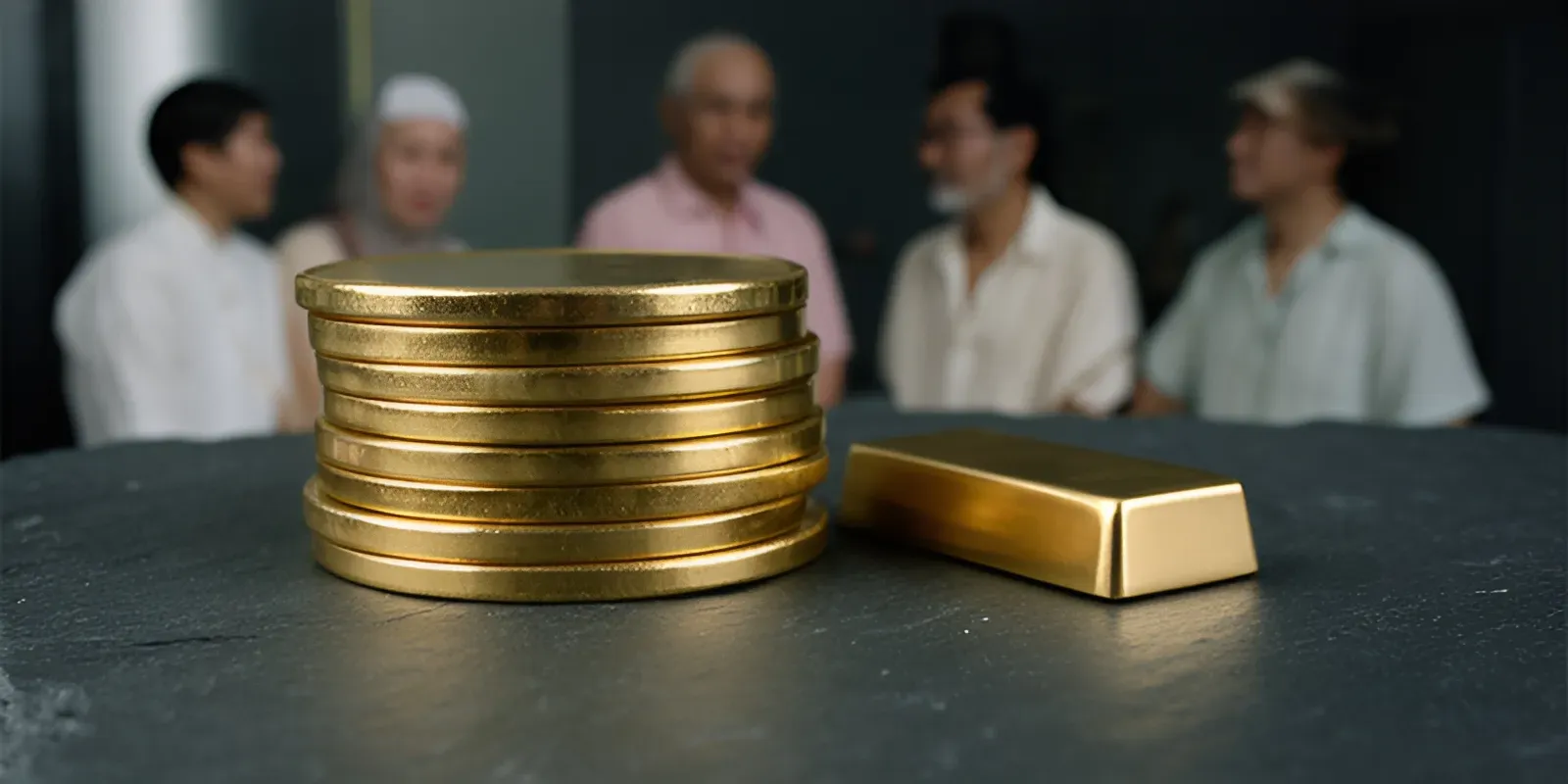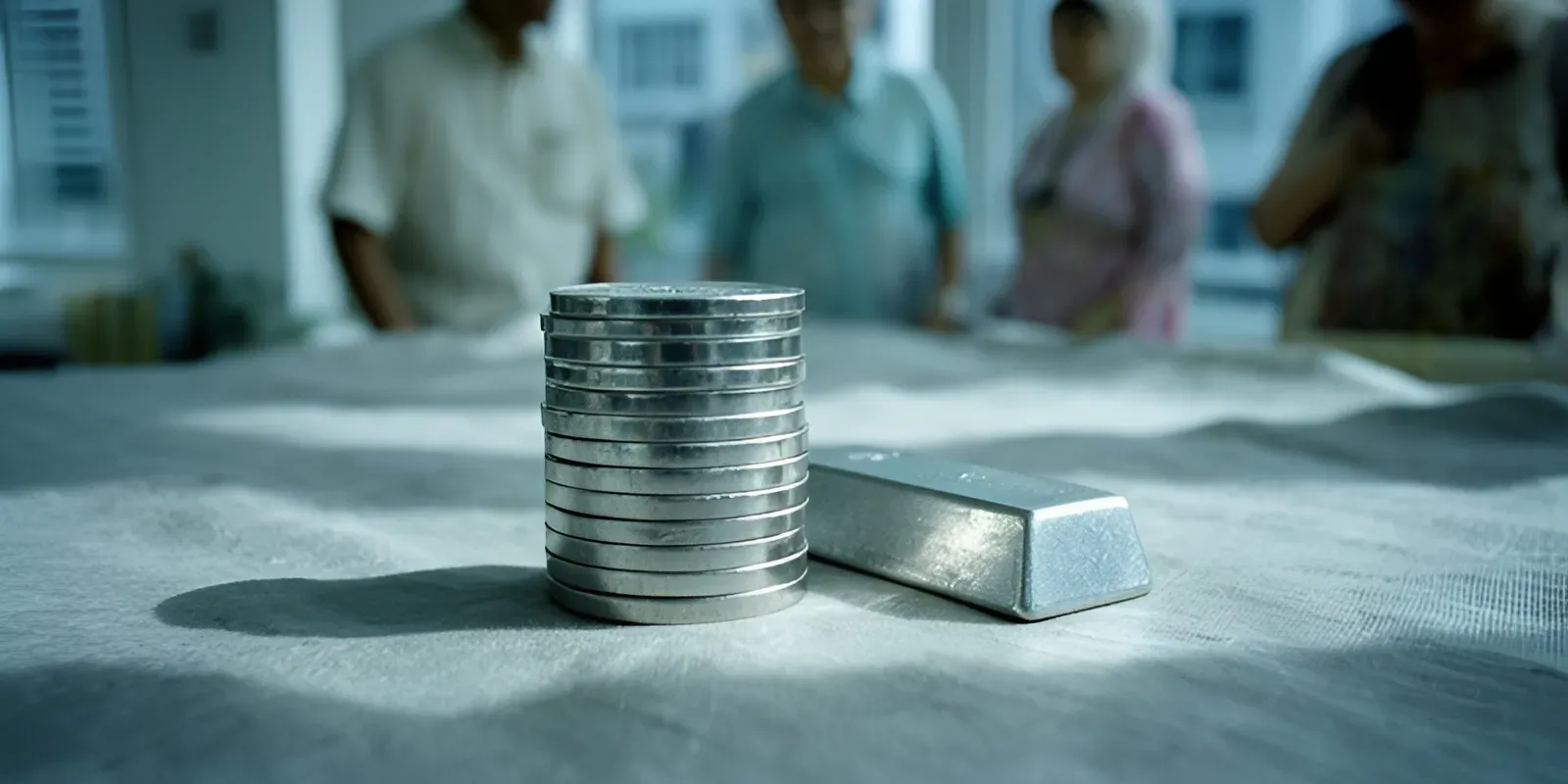
Investment-grade gold is exempt from GST in Singapore, but only if it meets IRAS’s rules: bars of at least 99.5% gold from an LBMA Good Delivery refiner, or coins on a prescribed list. Jewellery, scrap, proof coins and some well-known 22K coins are taxable at 9%. That is the short answer to how GST on gold in Singapore works.
Gold prices can fall as well as rise; past performance is not a guide; gold pays no interest. This guide sets out the rules from the IRAS e-Tax guide, twentieth edition, published on 30 January 2026.
GST on Gold in Singapore: The Basic Rule
IRAS calls qualifying metal investment precious metals (IPM). The importation and local supply of IPM are GST-exempt. Anything that fails the criteria is “non-IPM” and stays taxable at the standard rate of 9%, which has applied since 1 January 2024.
IRAS gives these examples of non-IPM: jewellery, scrap precious metals, numismatic coins, and precious metals from refiners not on the LBMA or LPPM Good Delivery lists.
| Item | GST |
|---|---|
| 999.9 gold bar from an LBMA Good Delivery refiner, with its hallmark | Exempt |
| Canada Maple Leaf, Austria Philharmonic or Singapore Lion bullion coin | Exempt |
| 22K American Eagle or Krugerrand gold coin | 9% |
| Singapore Lion gold proof coin | 9% |
| Gold bar pendant with a hole or hanger, or a heart-shaped bar | 9% |
| 916 gold jewellery | 9% |
| Storage, insurance or service charges | GST charged on the fee |
The short version: purity, refiner, shape and the coin list decide it. If an item is sold for its beauty or rarity rather than its metal, expect GST.
Rules for Gold Bars, Ingots and Wafers
Under paragraph 3.2 of the e-Tax guide, a bar, ingot or wafer must meet all four criteria:
- Purity: gold of at least 99.5%, silver of at least 99.9% or platinum of at least 99%.
- Tradeable on the international bullion market: refined by a refiner on the current or former LBMA Good Delivery list (gold and silver) or LPPM list (platinum), or a refiner endorsed by Enterprise Singapore. The IRAS web page says there are currently no refiners endorsed by Enterprise Singapore.
- A recognised quality mark, such as the refiner’s hallmark stamped on the bar. Bank-branded bars made by accredited refiners also qualify.
- Not decorative or a collector’s piece. IRAS gives two examples that fail: bars with a hanger or hole for wearing as a pendant, and odd-shaped bars such as boat, animal or heart shapes.
A dealer must check the refiner’s name or hallmark and the purity before treating a sale as exempt, and must issue an invoice with specific details for an exempt IPM sale. Keep that invoice: it also helps when you sell. Our guide to gold purity and karats explains the stamps.
Rules for Gold Coins
Coins must meet the same purity tests and be, or have been, legal tender in their country of origin. To give certainty, the qualifying coins are prescribed in the GST Act. The gold list includes:
- America Buffalo, Australia Kangaroo Nugget and Australia Lunar
- Austria Philharmonic, Canada Maple Leaf and China Panda
- Malaysia Kijang Emas, Mexico Libertad and Singapore Lion
- United Kingdom Britannia (gold coins minted from 2013), plus series such as Canada Call of the Wild and UK Queen’s Beasts
Two exclusions catch people out. Proof, numismatic and collector’s versions of listed coins do not qualify; IRAS’s own examples are Singapore Lion gold proof coins and Canada Call of the Wild gold proof coins. And the American Eagle and South African Krugerrand gold coins are not on the gold list: both are 22K. Their silver versions are on the silver list. Our bars vs coins guide compares the two.
What GST Means in Dollars
An illustration with made-up prices. A 916 gold bangle priced at S$2,000 before GST costs $2,180 with 9% GST. If you later sell it, buyers usually pay for the gold content only, so the GST and the workmanship are both lost. Our guide to selling gold jewellery shows how 916 is priced.
A qualifying 100 g bar quoted at $17,550 costs $17,550: no GST is added. Fees around it are different. UOB, for example, charges its Gold Savings Account service charge plus GST, and GST can apply to vault storage: GoldSilver Central, for example, states that its storage charges are subject to GST. The cost of holding gold includes that.
The November 2026 Wholesale Waiver Is Different
On 10 November 2026, MAS and the Ministry of Finance announced a plan to waive GST on specified wholesale services related to investment precious metals between institutions, such as vaulting, refining, assaying and broking, expected from April 2027. It does not change GST for individuals buying bars, coins or storage. See our report on the MAS gold vault.
What To Do Next
- Before paying, ask the dealer whether the item is sold as investment precious metal, and check the refiner, purity and shape yourself.
- For coins, check the exact coin and version against the list in IRAS’s e-Tax guide.
- Ask for an invoice that shows the item, weight and purity.
- Use the gold premium calculator to compare a GST-exempt bar with a taxable item on cost per gram, and see how to buy gold in Singapore for the GST treatment of each route.
- Do your own due diligence. This is general information, not tax advice; IRAS is the authority on any specific item.