Consumer rights in Singapore give you real protection when goods are faulty or a seller misleads you, but not when you simply change your mind. The Consumer Protection (Fair Trading) Act covers unfair practices such as false claims, and its Lemon Law part covers defects that show up within six months. If the seller will not fix things, the usual path is to put your complaint in writing, then go to the Consumers Association of Singapore (CASE) for mediation, then to the Small Claims Tribunals, where a claim of up to S$5,000 costs an individual $10 to file.
The steps are cheap. What they need is a paper trail.
The short version: No change-of-mind refunds by law, so read the return policy first. For defects within six months, ask for a repair or replacement, then a refund or price cut. If the seller refuses, try CASE mediation, then the Small Claims Tribunals for claims up to $20,000, filed within two years.
Your Basic Consumer Rights in Singapore
The Consumer Protection (Fair Trading) Act (CPFTA) protects consumers against unfair practices by suppliers. According to the Competition and Consumer Commission of Singapore’s FAQ, these include doing or saying anything that might deceive or mislead a consumer, making a false claim, and taking advantage of a consumer who is not in a position to protect their own interests. Property sales are excluded from the Act, apart from claims against property agents for their services.
The Commission’s Price Transparency Guidelines, in effect since 1 November 2020, add specific expectations on pricing: mandatory charges should be included in the total headline price, and claims about discounts, price comparisons and “free” offers must not mislead.
What the law does not give you: a right to return goods because you changed your mind or found them cheaper elsewhere. Any change-of-mind refund is the shop’s own policy.
The Lemon Law: When Goods Are Faulty
The Lemon Law covers goods that do not conform to the contract at the time of delivery, such as a faulty appliance. From the government’s advisory:
- Six-month presumption. If a defect is found within six months of delivery, it is presumed to have existed at delivery, unless the retailer can prove otherwise.
- Remedies in order. First, a repair or replacement. If that does not resolve it, a price reduction or a refund. A refund may be reduced to reflect your use of the item.
- What is not covered. Services, rentals and real property. Nor does it help if you damaged or misused the item, knew of the fault before buying, or changed your mind.
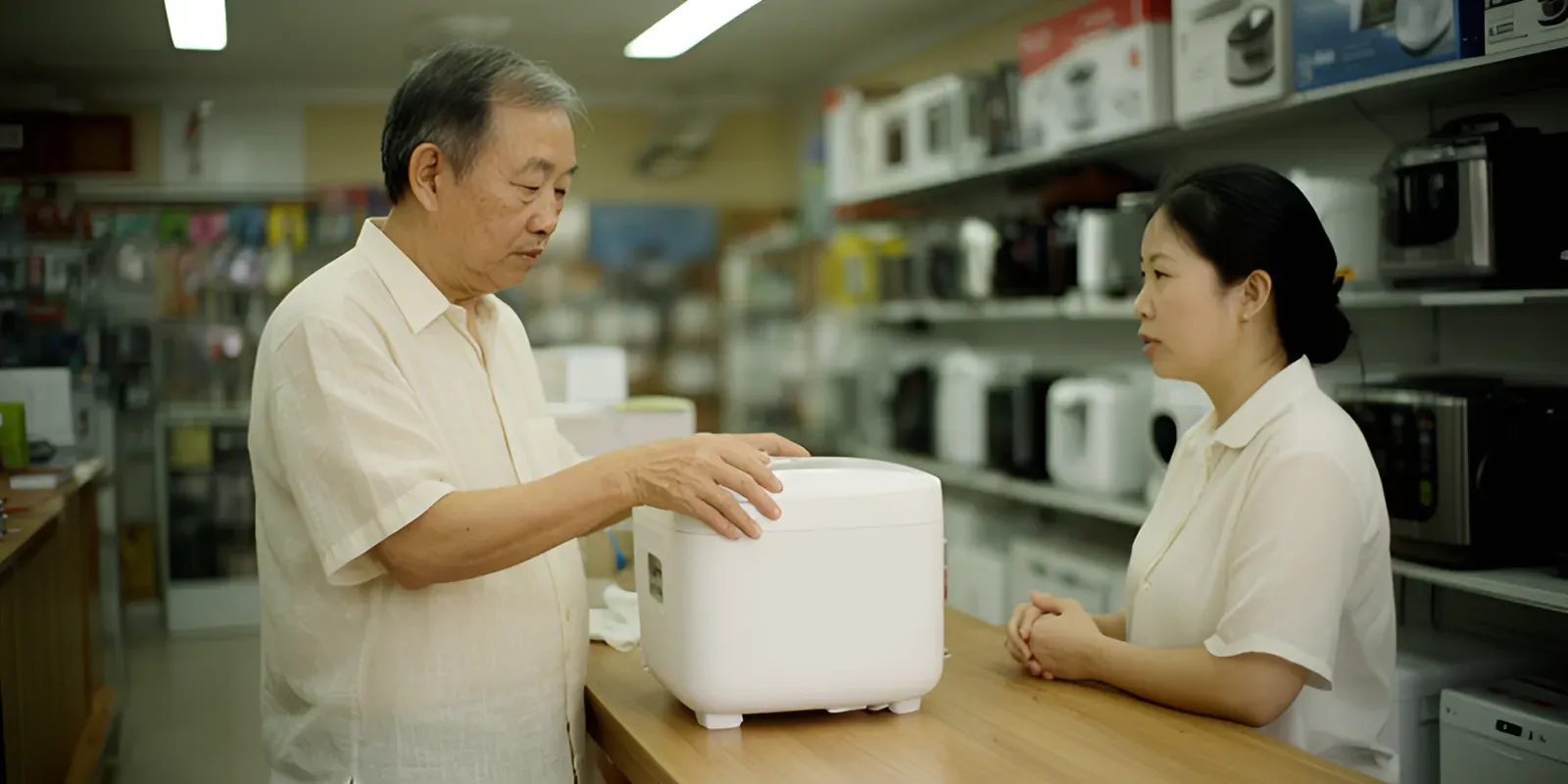
Example (illustrative): a rice cooker stops heating four months after purchase. The defect is presumed to have existed at delivery, so the shop must repair or replace it unless it can show you caused the fault.
Step by Step: What to Do When a Purchase Goes Wrong
- Stop using the item if it is faulty, and keep the receipt, packaging, order confirmation and any chat or email records.
- Contact the seller in writing. Say what is wrong, when you bought it, and what you want (repair, replacement, refund). Give a reasonable deadline, such as seven days.
- Escalate within the business if the first reply is unhelpful: ask for a supervisor or use the company’s formal complaints channel.
- Go to CASE if the seller does not resolve it (see below).
- File a small claim if mediation fails or the seller will not take part.
For online marketplace purchases, use the platform’s dispute or buyer-protection process first, and keep all payments inside the platform. Paying a seller directly outside the platform removes that protection and is a common feature of scams.
CASE Mediation
CASE helps consumers obtain redress through negotiation and mediation, according to the Commission’s FAQ. A consumer generally needs to be a CASE member for CASE to act on the case. The FAQ says fees are waived for members of trade unions that are CASE institutional members, NTUC Income policyholders and PAssion Card holders.
CASE’s contact details, as listed in that FAQ: 6277 5100 (Monday to Friday, 9am to 5pm), admin@case.org.sg, 170 Ghim Moh Road #05-01, Singapore 279621. Check CASE’s own website for current membership fees.
The Small Claims Tribunals
The Small Claims Tribunals (SCT) handle consumer and other small disputes without lawyers. From the Singapore Courts’ pages:
| Item | Rule |
|---|---|
| Claim limit | $20,000, or $30,000 if both parties sign a Memorandum of Consent |
| Filing fee (individuals) | $10 up to $5,000; $20 above $5,000 to $10,000; 1% of the amount claimed above $10,000 |
| Time limit | Within 2 years of the event that gave rise to the claim |
| How to file | Online, through the Community Justice and Tribunals System (CJTS) |
Example: a $1,500 claim for a faulty sofa costs $10 to file. A $12,000 claim costs $120.
The Singapore Courts website explains each stage of the process after you file.
Disputes With Telcos, and When It Is a Scam
Telecoms and pay TV. After raising a complaint with the provider, consumers can use a dispute scheme run by the Singapore Mediation Centre for disputes from the past year of up to S$10,000. Mediation costs S$10. Our comparison of SIM-only vs contract mobile plans covers the rules on contracts and early termination charges.
Scams are a police matter, not a consumer dispute. If you paid a seller who never delivered, or a “shop” that has vanished, report it to the police and call your bank at once. Our guide to online shopping scams explains what to do. If unsure whether something is a scam, call the ScamShield Helpline on 1799.
Card payments. If you paid by card for something that never arrived, contact your card issuer quickly and ask about disputing the transaction; issuers set their own time limits. Our guide to debit vs credit cards covers the difference between the two when something goes wrong.
What To Do Next
- Before a big purchase, read the return and warranty terms and keep the receipt and order confirmation.
- If something is faulty within six months, write to the seller asking for a repair or replacement.
- If the seller will not help, contact CASE, then consider the Small Claims Tribunals on the Singapore Courts website.
- Before the year-end sales, read our guide to shopping the sales without overspending.