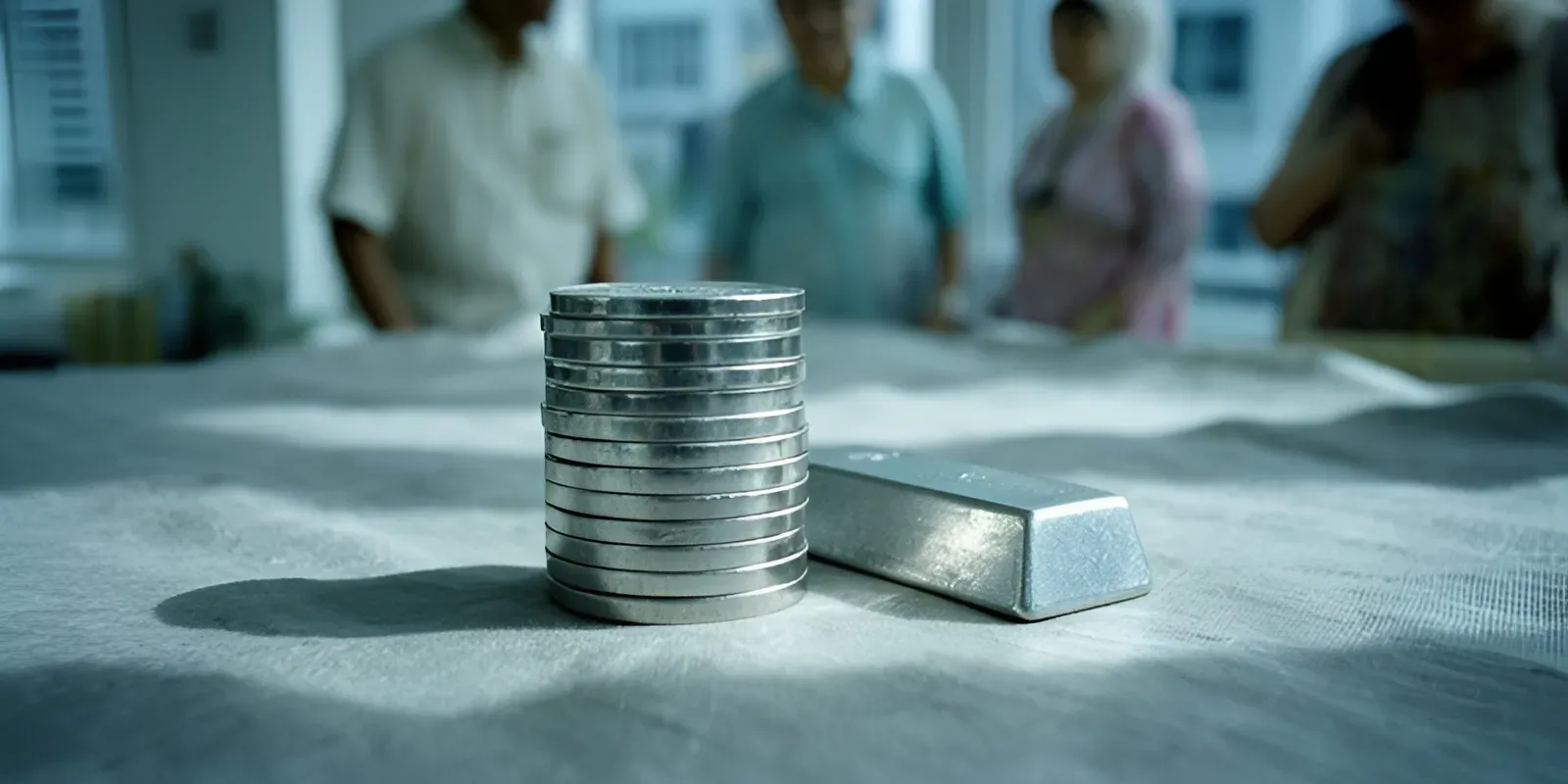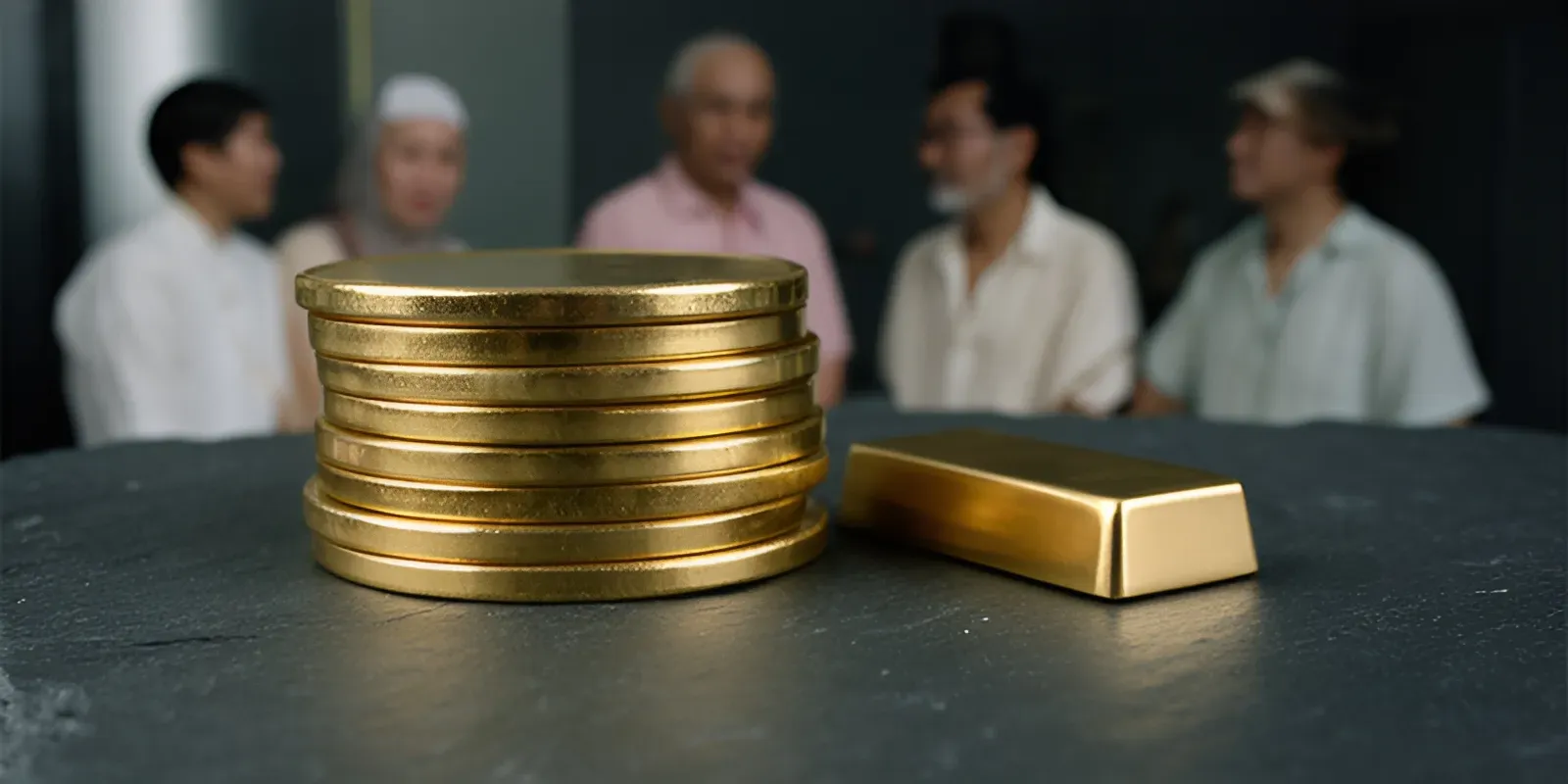
In the gold bars vs gold coins choice, bars usually cost less per gram above the spot price, especially in larger sizes, while coins and small bars cost more per gram but let you sell a little at a time. Both can be exempt from GST in Singapore, but only if they meet IRAS’s rules, and some popular coins do not.
Gold prices can fall as well as rise; past performance is not a guide; gold pays no interest. This guide compares the two on cost, tax and resale. It does not suggest buying either.
Gold Bars vs Gold Coins: The Main Differences
| Bars | Coins | |
|---|---|---|
| Typical purity | 999.9 for most investment bars | 999.9 for many bullion coins; some are 22K (916.7) |
| Premium per gram | Usually lower, falling as the bar gets bigger | Usually higher, because of minting and design |
| GST | Exempt if 99.5% gold or more from an LBMA Good Delivery refiner, with a quality mark | Exempt only if on IRAS’s prescribed list and not a proof or collector’s version |
| Selling in parts | Hard with one large bar | Easy: sell one coin at a time |
| Recognition | Refiner’s hallmark, weight and purity stamped on the bar | Coin design known worldwide; legal tender in its home country |
The short version: bars spread fixed costs over more gold; coins buy flexibility and recognition at a higher price per gram. Either way, check that it qualifies as investment precious metal before you pay.
Why Small Pieces Cost More per Gram
Every bar or coin carries a premium above the value of its gold. Part of that premium is a fixed cost per piece: refining or minting, packaging, assay certificates, shipping and the dealer’s handling. Spread over 100 grams, those costs are a small share of the price; spread over 5 grams or one ounce, they are a much bigger share. Coins add design and minting work on top.
Here is an illustration with made-up round numbers, not any dealer’s prices. Assume spot gold is S$170 a gram and all three items are 999.9 fine:
| Item (illustration) | Gold content | Melt value | Price paid | Premium | Cost per gram of gold |
|---|---|---|---|---|---|
| 100 g bar | 99.99 g | $16,998 | $17,400 | 2.4% | $174.02 |
| 1 oz coin | 31.10 g | $5,287 | $5,650 | 6.9% | $181.67 |
| 5 g bar | 5.00 g | $850 | $940 | 10.6% | $188.02 |
Put real quotes into the gold premium calculator to see the same comparison for the items in front of you. Our gold premiums explainer shows how the buy-back spread adds to the cost.
GST: Which Bars and Coins Qualify
IRAS’s e-Tax guide (twentieth edition, January 2026) exempts investment precious metals from GST. For bars, ingots and wafers, gold must be at least 99.5% pure, refined by a refiner on the current or former LBMA Good Delivery list, and carry an internationally accepted quality mark such as the refiner’s hallmark. Decorative and collector’s bars do not qualify, and IRAS names two examples: bars with a hanger or hole for wearing as a pendant, and odd-shaped bars such as boats, animals or hearts.
For coins, IRAS prescribes the list. Gold coins on it include the America Buffalo, Australia Kangaroo Nugget, Austria Philharmonic, Canada Maple Leaf, China Panda, Malaysia Kijang Emas, Mexico Libertad, Singapore Lion and UK Britannia. Proof, numismatic and collector’s versions are excluded, such as Singapore Lion gold proof coins.
Two well-known gold coins are not on the gold list: the American Eagle and the South African Krugerrand. Both are 22K, below 99.5% purity, so GST applies when you buy them. Only their silver versions are prescribed. Our GST on gold guide has the detail.
Selling Bars and Coins Back
Resale depends on who will buy and on what terms:
- Condition and paperwork matter. UOB buys back only bars and coins originally bought from UOB or OUB, with the original invoice and an intact seal, and for gold bought from 1 March 2025 only UOB current or savings account holders can sell it back.
- Some dealers buy widely. BullionStar says it buys all types of bullion, but bars that do not meet its standards are bought at a discount of 1.5% to 6%.
- Size affects flexibility. With one 100 g bar you sell all of it or none. Ten 10 g bars or ten coins let you sell part, at a higher cost per gram when you buy.
Read how to sell gold in Singapore for how buy-back prices are set.
Who Each Suits, and Who It Does Not
Bars tend to suit people buying a larger amount in one go who expect to hold it for years and sell it in one piece. They do not suit someone who may need small amounts of cash along the way.
Coins and small bars tend to suit people buying a little at a time or who want to sell in parts. They do not suit someone trying to keep costs per gram as low as possible.
Neither suits money you may need soon: a fall in the gold price and the buy-back spread can both cut what you get back. See gold in a retirement portfolio for how long past falls have lasted.
What To Do Next
- Ask two or three registered dealers for the price and buy-back price of the exact items you are comparing, on the same day.
- Work out the cost per gram of pure gold with the gold value calculator or the premium calculator.
- Check the item against IRAS’s purity, refiner and coin rules, and ask for an invoice.
- Read how to buy gold in Singapore for the other routes.
- Do your own due diligence. This is general information, not a recommendation.