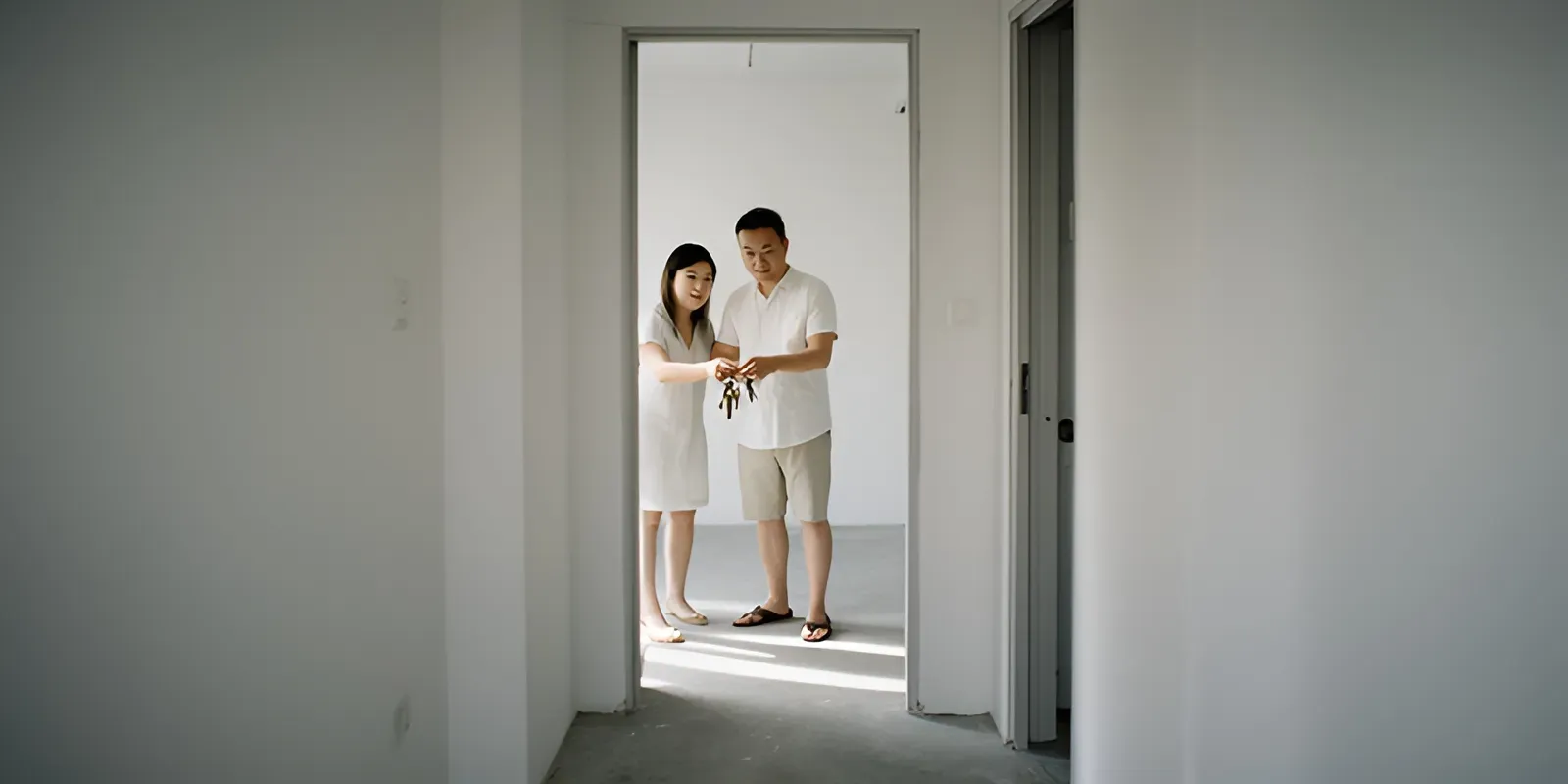
If you used CPF savings to buy your home, you can put that money back before you sell. CPF Board calls this a voluntary housing refund. The cash goes mainly to your Ordinary Account, where it earns 2.5% a year, attracts no tax relief and cannot be taken back.
It is often described as a way to “save on accrued interest”. That is true in a narrow sense, but it can mislead. This article explains what a refund really does, when it tends to help and when it does not.
How a CPF Voluntary Housing Refund Works
You pay cash to CPF Board, and it is credited back to your CPF accounts. The rules are:
- Amount. Any sum up to the CPF principal you withdrew for the property plus the accrued interest. Partial refunds are allowed, and you can make more than one.
- Order. A refund reduces the principal first. Anything beyond that goes towards the accrued interest.
- Where it goes. Mainly your Ordinary Account (OA). Depending on your age and any housing grants you received, part may go to your Special, Retirement or MediSave Account.
- If you are 55 or older. The refund first fills your Retirement Account up to your Full Retirement Sum if there is a shortfall. The rest stays in the accounts it is credited to.
- Tax relief. None.
- Reversibility. The refund is irrevocable.
You apply online or in the CPF Mobile app and pay by PayNow. The amount you can refund is shown in your Home ownership dashboard.
What ‘Saving Accrued Interest’ Really Means
Accrued interest is the interest your CPF savings would have earned had they stayed in your OA. When you sell, the principal and that interest go back into your own CPF account. It is not a fee paid to anyone else. Our guide to accrued interest when selling a flat covers this in full.
So a refund does not make a charge disappear. It moves cash from your bank account into your OA today, where it earns OA interest. The “saved” accrued interest and the interest your OA earns are the same thing seen from two sides.
Put simply, a voluntary housing refund is a deposit into your OA that you are otherwise not allowed to make, capped at what you took out for your home.
A Worked Example
Take an illustrative homeowner aged 45. Ten years ago she used S$100,000 from her OA for her flat. At 2.5% a year, the accrued interest is now about $28,000. She has $30,000 in spare cash.
If she refunds $30,000:
- Her OA rises by $30,000 and her outstanding principal falls to $70,000.
- At a constant 2.5%, the $30,000 grows to about $38,400 in her OA by age 55.
- When she eventually sells, she must return about $38,400 less to CPF from the proceeds, so she receives that much more in cash.
If she keeps the $30,000 in the bank instead, it grows at whatever her bank or other savings pay. At sale, more of the proceeds go to her OA and less to her in cash.
Her total wealth differs between the two paths only by the gap between 2.5% and what the cash would have earned elsewhere. What really changes is where the money sits and whether she can reach it.
This is an illustration only, not a guarantee. It assumes a single lump-sum withdrawal ten years ago, a constant 2.5% OA rate and no extra interest. Use our accrued interest calculator for your own figures.
How It Compares With Other Uses of the Same Cash
| Voluntary housing refund | Cash top-up to Special or Retirement Account | |
|---|---|---|
| Account credited | Mainly OA | Special Account (below 55) or Retirement Account |
| Interest | 2.5% a year (OA) | 4% a year floor, to 31 December 2027 |
| Tax relief | None | Up to $8,000 a year for yourself |
| Can the money be used for housing again? | Yes, OA savings can | No |
| Reversible | No | No |
For members below 55, OA savings also earn an extra 1% on the first $20,000, as part of the extra interest on the first $60,000 of combined balances. A refund that lifts a low OA balance towards $20,000 benefits from that.
The short version: A voluntary housing refund moves cash into your OA at 2.5%, with no tax relief and no way back before 55 except through CPF schemes. It changes where your money sits more than how much you have.
When It Tends to Make Sense
You plan to sell and want more cash at completion. Someone a few years from right-sizing may prefer to have the CPF refund settled, so more of the sale proceeds arrive as cash. Our HDB sale proceeds calculator estimates the cash and CPF refund at a given price.
You want a guaranteed 2.5% and have no better home for the cash. For money earning less elsewhere that you will not need, the OA rate is a floor set by law.
You want OA funds for the next property. Refunded OA savings can be used for a replacement home.
You are 55 or older with your retirement sum set aside. A refund that lands in your OA follows the withdrawal rules that apply from 55. Check your dashboard first, because a refund fills any Retirement Account shortfall before it reaches the OA.
When It Does Not
Your cash buffer is thin. Below 55, refunded money cannot be withdrawn as cash. CPF Board itself cautions against a refund if you have ongoing commitments such as debts.
You are chasing tax relief. There is none. If relief is the aim, a cash top-up is the tool, with its own lock-in.
Your home may sell for less than you owe CPF. CPF Board says that if a property is sold at market value and the proceeds cannot cover the full refund, you do not have to make up the shortfall in cash. A voluntary refund made earlier would have used cash you might never have been asked for.
You own private property and want the CPF charge lifted. Discharging the charge after a full refund involves a lawyer, paid in cash. CPF Board says that once it is lifted, no further CPF transactions can be made for that property, and a later pledge would need a new charge and further legal costs.
You have higher-cost debt. Clearing a loan that charges more than 2.5% generally does more for you than earning 2.5%.
What To Do Next
- Open your Home ownership dashboard and note the principal withdrawn, the accrued interest and the maximum refund.
- Compare 2.5% with what your spare cash earns now, after deciding how much you must keep accessible.
- If you are 55 or older, check whether your Retirement Account has a shortfall that a refund would fill first.
- Start with a partial refund if you are unsure. It cannot be undone, but it can be repeated.
- See every CPF strategy by age for how a refund compares with other moves.