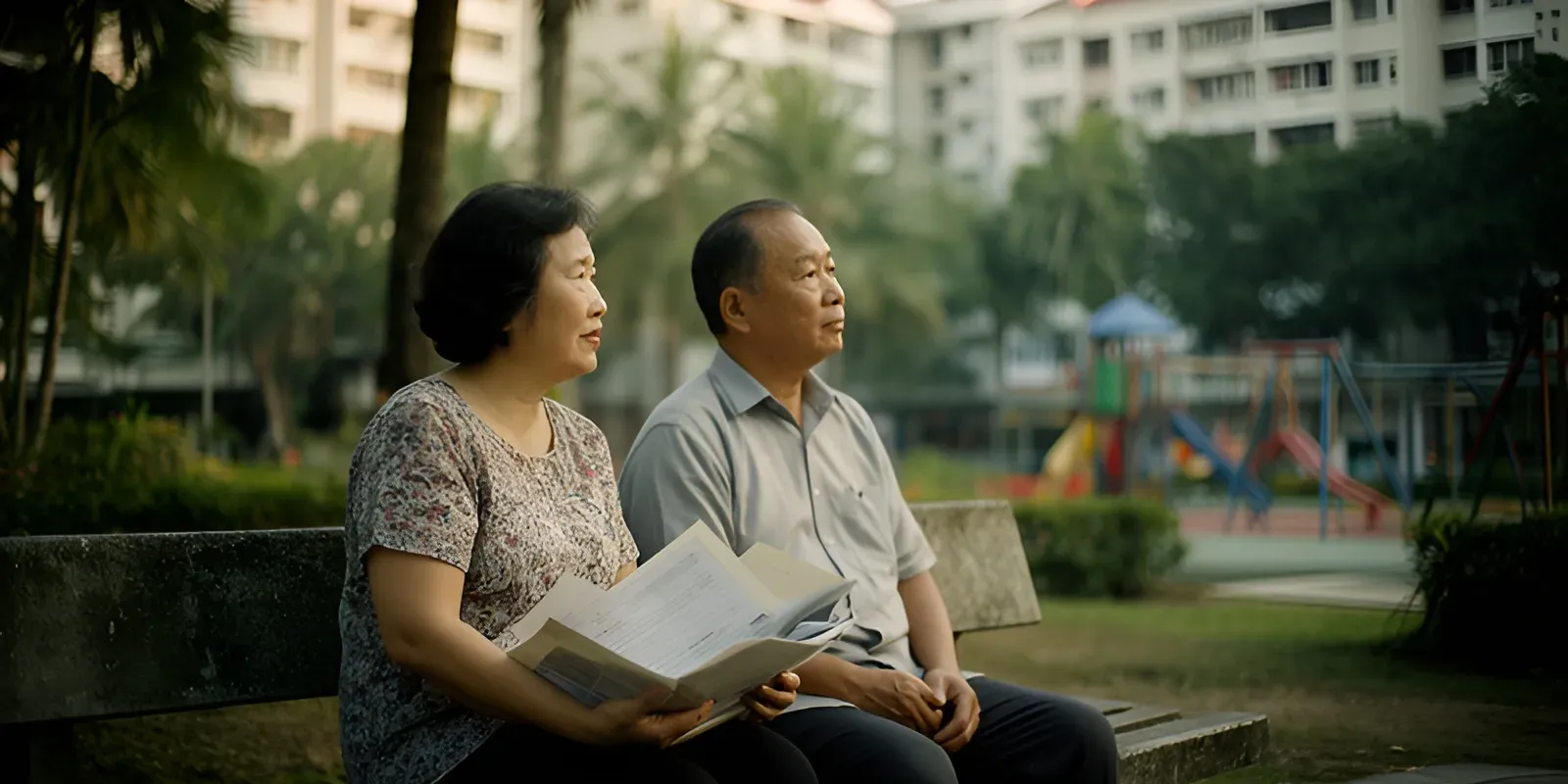
Most Singaporeans pay for their HDB flat partly with CPF. When they sell, the CPF they used goes back to their CPF accounts first, together with CPF accrued interest: the interest that money would have earned had it stayed in the Ordinary Account. That is why many sellers are surprised by how little cash they receive.
This is not a penalty. It is your own retirement money being restored. But it pays to understand the numbers before you sign an Option to Purchase.
What CPF Can Pay For
CPF Board says Ordinary Account (OA) savings can be used for the downpayment, the housing loan, and stamp and legal fees.
There are limits. The property generally needs a remaining lease of more than 20 years. If the lease does not cover the youngest buyer to age 95, the amount of CPF you can use is pro-rated. CPF’s housing usage calculator gives your figure.
What CPF Accrued Interest Is
When you sell, you refund two things to your CPF: the principal you withdrew, and the accrued interest on it.
CPF Board describes accrued interest as the amount you would have earned if those savings had stayed in your OA. It builds on the principal and on interest already added, so it compounds over time.
The OA rate is subject to a legislated minimum of 2.5% a year, and it is 2.5% from October to December 2026.
A simple illustration
Illustration only. Assumes a single lump sum and a constant 2.5% a year, compounded annually. Real calculations run on each withdrawal, including monthly instalments.
An illustrative couple used S$100,000 of CPF for their downpayment.
| Years since the withdrawal | Principal | Accrued interest | Total to refund |
|---|---|---|---|
| 15 | $100,000 | $44,830 | $144,830 |
| 20 | $100,000 | $63,862 | $163,862 |
| 25 | $100,000 | $85,394 | $185,394 |
After 25 years, the accrued interest is close to the principal itself. Add years of monthly instalments paid from CPF, and the total refund can be a large share of the sale price. Our CPF accrued interest calculator estimates the figure for your own withdrawals.
The short version: CPF used for your flat, plus the interest it would have earned in your OA, goes back to your CPF accounts when you sell. It is your money, not a charge, but it reduces the cash you receive. If you sell at market value and the proceeds are not enough, you do not have to top up in cash.
What Happens When You Sell
The order works like this:
- The sale proceeds first repay any outstanding housing loan, and sale-related expenses.
- Your CPF refund goes back to your CPF: principal, accrued interest, any housing grants with their interest, and, if you are 55 or older and pledged the property, the pledged amount.
- Whatever is left is paid to you in cash.
Worked example
An illustrative couple sells their flat for $520,000. They owe $60,000 on their housing loan. Their Home ownership dashboards show a combined CPF refund of $240,000.
- Sale price: $520,000
- Less housing loan: $60,000, leaving $460,000
- Less CPF refund: $240,000, returned to their CPF accounts
- Cash proceeds: $220,000, before sale-related costs
The $240,000 is not lost. It sits in their CPF accounts earning interest and can be used for their next home, within the rules. To test your own sale price, use our HDB sale proceeds calculator.
If the sale price is not enough
Suppose the same couple could only sell for $280,000. After repaying the $60,000 loan, $220,000 remains, which is less than the $240,000 refund.
If the flat is sold at market value, CPF Board says they refund only the selling price less the outstanding loan, here $220,000. They do not have to make up the $20,000 shortfall in cash. They would receive no cash proceeds.
Any option money received in cash from the buyer counts as part of the selling price and must be refunded to CPF before completion.
Where the Refund Goes
Below 55: the refund is credited to your OA.
55 and above: the refund is first used to top up your Retirement Account to your Full Retirement Sum. Any balance stays in your OA. From there, CPF Board says you can withdraw it in cash for immediate needs or transfer it to your Retirement Account for higher interest and payouts. Our guide to CPF strategies by age covers those choices.
There is one exemption for older members. If you turned 55 before 1 January 2013 and had set aside your Full Retirement Sum before that date, you are not required to refund CPF used for the property before 2013. Only principal used from 1 January 2013, and its accrued interest, needs to be refunded.
Voluntary Housing Refunds
You can choose to refund some of the CPF you used before selling. CPF Board notes a partial refund reduces the principal first, then the accrued interest. It stops further interest accruing on that amount and can mean more cash when you eventually sell.
The trade-off is access. If you are below 55, refunded money cannot be withdrawn in cash until you meet CPF’s withdrawal conditions from 55. Keep enough cash for emergencies before considering it. We weigh it up in when a voluntary housing refund makes sense.
What To Do Next
- Log in to the CPF website and open your Home ownership dashboard to see your principal, accrued interest and estimated refund if you sold today.
- Run HDB’s sale proceeds calculator before committing to your next purchase.
- If you are 55 or older, check your Retirement Account against your Full Retirement Sum to see how much of the refund will go there first.