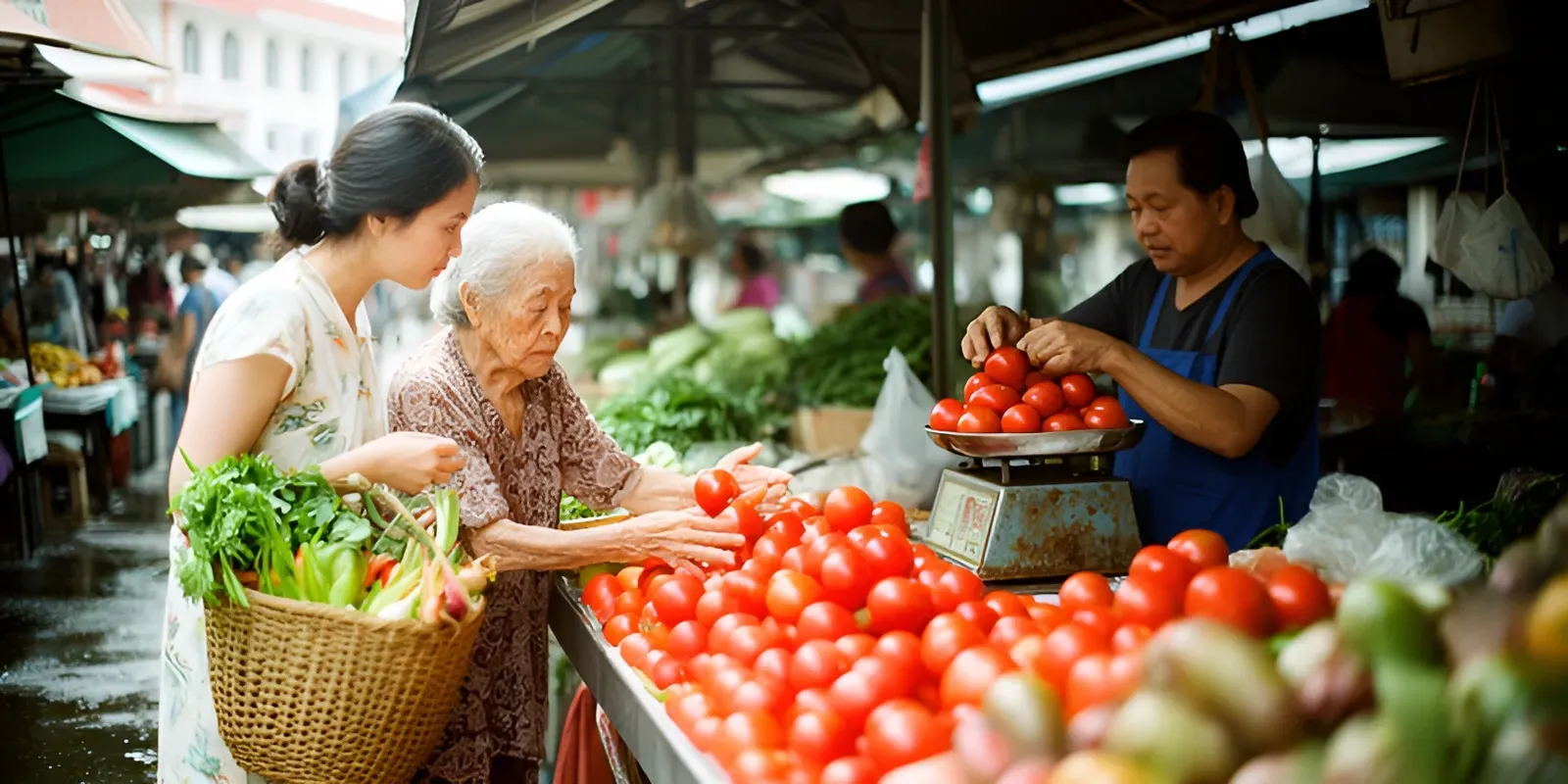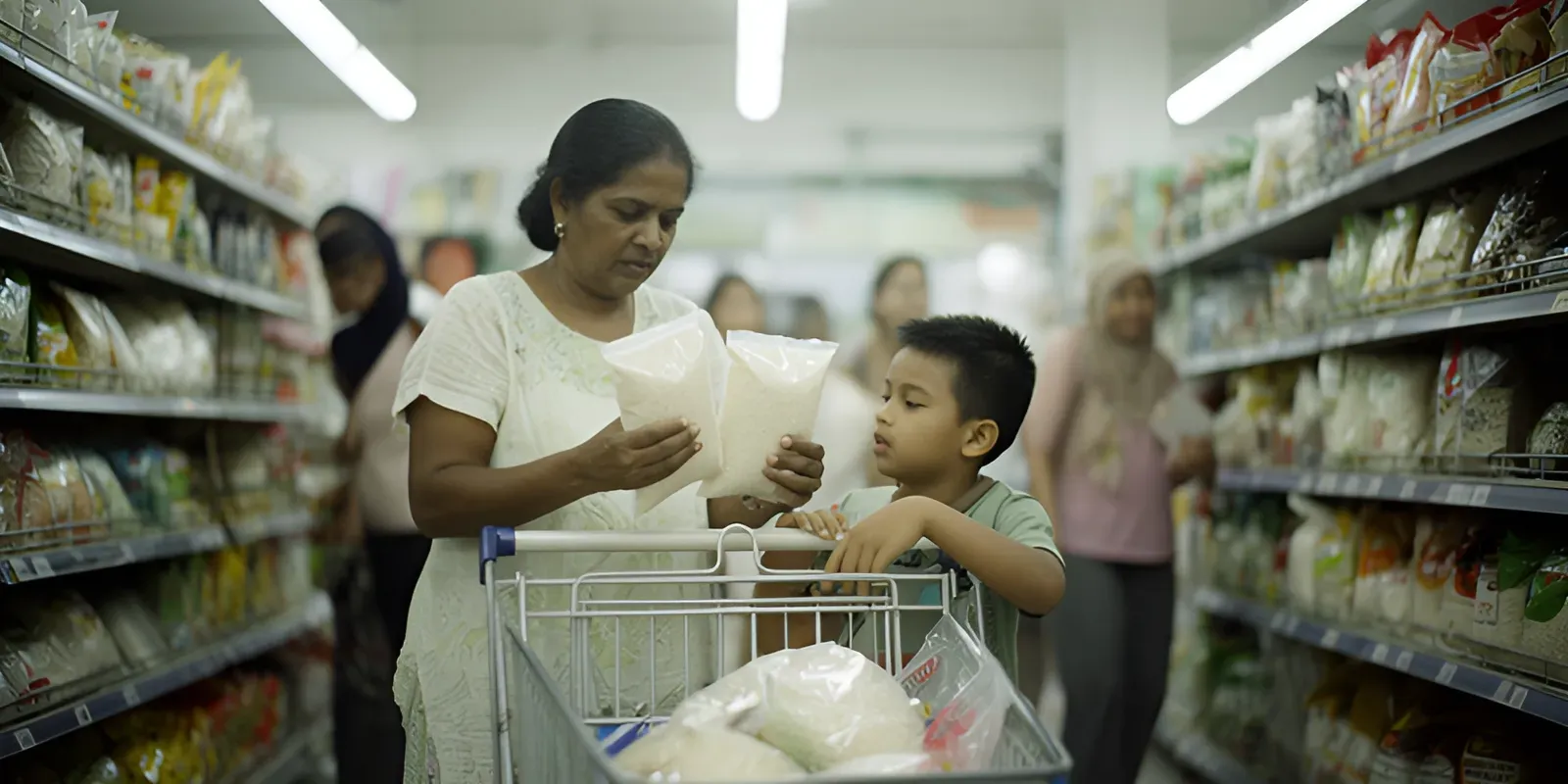
How to save on groceries in Singapore comes down to a few habits rather than one trick: compare unit prices, use house brands for staples, shop from a weekly list, check prices across shops for the things you buy every week, and use vouchers and card rewards on spending you would do anyway. On an illustrative S$600 monthly grocery bill, those habits together could plausibly save $50 to $100 a month, depending on what you buy.
Below, we go through each habit with simple maths using hypothetical prices.
The short version: Compare price per kilogram or litre, switch staples to house brands where you are happy with the quality, shop from a list, and check your regular basket across two or three shops. Vouchers and card rewards help, but only on spending you had planned.
Habit 1: Compare Unit Prices, Not Pack Prices
Packs come in different sizes, so the pack price says little. The unit price (per 100g, per kilogram or per litre) does.
Illustration only, hypothetical prices:
| Pack | Price | Price per kg |
|---|---|---|
| Cooking oil, 2 litres | $7.90 | $3.95 per litre |
| Cooking oil, 5 litres | $17.50 | $3.50 per litre |
| Rice, 5kg | $13.80 | $2.76 |
| Rice, 10kg | $29.00 | $2.90 |
The larger oil bottle is cheaper per litre. The larger rice bag is not. Bigger is often, but not always, cheaper.
Unit pricing is becoming easier to find. According to a speech by Senior Minister of State Low Yen Ling on 15 March 2026, the government and the Consumers Association of Singapore (CASE) have piloted unit pricing at more than 180 supermarket outlets since September 2025, with plans to extend it to more supermarkets, in-store and online. Where a shelf label does not show it, divide the price by the weight.
When bulk does not pay: if part of a large pack spoils or goes stale before you use it, the real unit price rises. A 10kg bag that lasts a small household four months may not be worth the space or the risk of weevils.
Habit 2: Switch Staples to House Brands
Supermarket house brands for staples such as rice, flour, sugar, cooking oil, tissue, detergent and canned goods are usually priced below the branded equivalents. Try one item at a time and keep the ones you are happy with.
Worked example (hypothetical): if $150 of your monthly basket is staples and the house-brand versions cost 20% less, the saving is $30 a month, or $360 a year.
Fresh food, coffee, baby formula and items where taste or a specific product matters are often better left alone. The point is to switch where you will not notice the difference.
Habit 3: Shop From a Weekly List
Unplanned buys are where grocery bills drift. A list built from a rough weekly meal plan does three things: it stops duplicate buys, it reduces waste and it limits impulse purchases at the end of the aisle.
A simple routine:
- Check the fridge and cupboard before you go.
- Plan four or five dinners; leave the rest for leftovers and eating out.
- Write the list in the order of the shop’s layout so you spend less time browsing.
Worked example (hypothetical): if unplanned items add $20 to each of four weekly shops, cutting that by half saves $40 a month.
Habit 4: Check Your Regular Basket Across Shops
Prices for the same item can differ between supermarket chains, between a hypermarket and a neighbourhood outlet, and between online and in-store. You do not need to compare everything; compare the 10 to 15 items you buy every week.
CASE’s free Price Kaki app compares prices of everyday items across shops; the 15 March 2026 speech says it now shows unit prices for more than 1,200 items. You can also check the supermarkets’ own online stores.
Do this once every few months:
- List your regular items with the pack size.
- Note the price at two or three shops you can easily reach, or on their online stores.
- Buy each item where it is cheapest when you are already there, but do not make extra trips that cost more in time and transport than you save.
Online grocery orders can be convenient but check the delivery fee and any minimum order. A $5 fee on a $50 order adds 10% to the basket.
Habit 5: Use Vouchers and Promotions on Planned Spending
CDC Vouchers. Each tranche has a part for participating supermarkets and a part for heartland merchants and hawkers. For example, the January 2026 tranche was $300 per household ($150 for supermarkets) and is valid until 31 December 2026. Use the supermarket portion on your regular groceries rather than on extras. Our year-end household money audit lists the tranches and their expiry dates.
Promotions. “Buy 2 for $X” and member prices help only when you would buy that quantity anyway and can use it before it expires. Check the unit price on promotions too: a multi-buy is sometimes no cheaper per unit than a larger single pack.
Seniors’ and member discount days. Some supermarkets run discount days for particular groups. As one example, FairPrice Group’s release of 18 December 2025 lists daily discounts valid until 31 December 2026: 3% for Pioneer Generation cardholders on Mondays, 2% for seniors on Tuesdays, 3% for Pioneer and Merdeka Generation cardholders on Wednesdays, and CHAS Blue (Thursdays) and CHAS Orange (Fridays) discounts, capped at $200 of spending per transaction per day. Its 2 September 2026 release doubled the CHAS discount to 6% until 1 January 2027. Other chains have their own schemes; terms change, so check the supermarket’s own page.
Worked example (hypothetical): a Merdeka Generation shopper who moves a $120 weekly shop to Wednesday saves 3%, or $3.60 a week: about $187 a year.
Habit 6: Pay in a Way That Gives Something Back
If you pay for groceries by card and clear the balance in full each month, a card that gives cashback or rewards on supermarket spending returns a small percentage. Our comparison of credit cards for groceries sets out the caps and minimum spends. A debit card with cashback is an option if you prefer not to use credit; see our guide to debit vs credit cards.
Card rewards never outweigh interest. If a grocery bill would sit on a card unpaid, the interest will cost more than any cashback earned.
How Much You Could Save on Groceries
Illustration only, for a household spending $600 a month on groceries. Your results will differ.
| Habit | Assumption | Monthly saving |
|---|---|---|
| House brands for staples | 20% less on $150 of staples | $30 |
| Shopping from a list | Half of $80 unplanned buys | $40 |
| Comparing your regular basket | 5% on $200 of regular items | $10 |
| Total | $80 (about 13%) |
That is $960 a year from habits rather than big sacrifices. Card rewards and vouchers come on top, but they reduce the cost of the same basket; they are not extra savings on their own.
What To Do Next
- Write down the 10 to 15 items you buy every week and check their unit prices at two shops this month.
- Try one house-brand staple at a time and keep the ones you like.
- Use any remaining January 2026 CDC Vouchers on regular groceries before 31 December 2026.
- Track a month of grocery spending in our monthly budget planner to see where the money goes.